

Estée Lauder Companies (ELC) CEO Stéphane de la Faverie has revealed how the beauty giant has a new strategy in place to accelerate the performance of ‘indie’ brands within its portfolio.
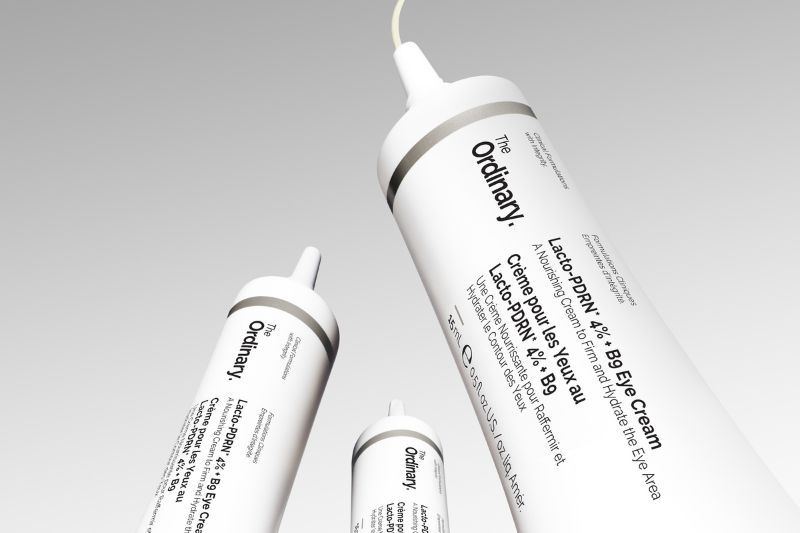
It comes as its skin care brand The Ordinary nears US$1bn annual sales, according to de la Faverie, who spoke at the Barclays Global Consumer Conference on 9 September.
Outlining the results of ELC’s ‘Beauty Reimagined’ turnaround plan so far, de la Faverie said The Ordinary has been one of ELC’s three fastest-growing brands, along with Killian Paris and Le Labo.
Tickets are now available for the 25th anniversary of the Pure Beauty Awards, taking place on 15 October 2026 at the Grosvenor House Hotel in London, UK. Join the beauty industry for an evening of recognition and celebration as this year’s winners are revealed. Click here to secure your place.
ELC invested in The Ordinary’s parent company Deciem in 2017 and acquired a majority stake in 2021 before acquiring it outright in 2024.
“Kilian Paris and The Ordinary are two examples [where] the brand has created an alternative model to be able to accelerate an indie brand within the portfolio of the Estée Lauder Companies,” said de la Faverie.
“That is new from the model that we had in the past, and mainly operationalised by ‘Beauty Reimagined’.
“So, we can create the next big brand for the future that will add more building blocks of growth for the company in the future.
“We really think that we have the winning playbook.”
Some founders of brands previously acquired by ELC have spoken out recently about the difficulties they faced running their brands under the conglomerate’s ownership, while other brands, such as Becca Cosmetics, were later shut down after being acquired by ELC.
Jerrod Blandino, co-founder of make-up brand Too Faced, which was bought by ELC in 2016 and which he departed in 2022, alleged in August that a battle for control began “very quickly” after a positive first year post-deal.
Bobbi Brown, the MUA who sold her namesake brand to ELC in 1995 and has since launched make-up brand Jones Road Beauty, claimed her last two years at her namesake brand left her “miserable” during an appearance on the Aspire with Emma Grede podcast earlier this year.
Some in the industry have even labelled the struggles indie brands face after being acquired the ‘ELC curse’.
New ‘One ELC’ model ‘is working’
The beauty giant first announced its ‘Profit Recovery and Growth Plan’ (PRGP) in November 2023 to boost flagging sales.
This programme was expanded in February last year under the banner, ‘Beauty Reimagined’.
ELC’s new ‘One ELC’ operating model means the conglomerate is now “better positioned to compete in prestige beauty, accelerating our speed at which we are driving the pace of the demand of the consumers, but also the competition of the indie brands today,” said de la Faverie at the Barclays Consumer Conference.
“And, as we move further, we will not just match the speed of the indie brands. Our intention is to push past their speed.
“The speed of innovation for us is really absolutely key.
“We are a simpler organisation today, much more agile as one team, with fewer layers and silos, and greater accountability as we are exiting the PRGP two-year restructuring programme that we have just concluded on 30 June.
“We are also a nimbler organisation with refined ownership between who does what in the organisation, between brands, between regions, and between the operations within the company.
“That has really helped us to strengthen our brand building, between brands and around the world, and also to be much more strategic on how and where we are spending our consumer-facing investment.”
De la Faverie continued: “We are a much bolder organisation, more united and transformative-oriented organisation through all the beauty commitment that we have deployed, that now have been cascaded to all the organisations around the world.
“And, finally, we are a more efficient organisation, having evolved how we work between us, but also with our partners.”
De la Faverie did not expand on when The Ordinary might hit the $1bn milestone, only that it is “coming very close to that for the near future”.
The skin care company would join Estée Lauder, Clinique, MAC Cosmetics, La Mer, Tom Ford Beauty and Jo Malone London in ELC’s billion dollar club.
Alongside The Ordinary, which is ELC’s largest ‘indie’ brand, de la Faverie highlighted the performance of MAC Cosmetics and Kilian Paris in the 2026 fiscal year.
“Kilian Paris, while a much smaller brand in our portfolio, is another great case study of how powerful ‘Beauty Reimagined’ is,” he said.
“During the course of 2026, we have really deployed the brand in more channels, more retailers around the world.
“We have invested in innovation, and today we are proud to say that we have a 19% point acceleration in organic sales growth from fiscal 2025 to fiscal 2026.
“From a large brand to a smaller brand, the model is working.”
Related content:
-
Estée Lauder Companies shakes up brand leadership team to fuel ‘next phase of growth’
- Estée Lauder Companies strengthens Amazon and AI capabilities with expanded executive roles
- Estée Lauder Companies restructuring costs rise again to $1.75 billion
- ‘It is just important for me to move on’: Bobbi Brown speaks on selling her namesake brand in podcast
- Estée Lauder Companies US tariff refunds help net sales top $15 billion in 2026
- The Ordinary takes swipe at ‘overinflated language’ used to sell beauty via global pop-up


