

What do Victoria Beckham, Idris Elba and Kanye West all have in common? Beyond being instantly recognisable and enviably wealthy, all three celebrities have filed for cosmetic product trademarks in recent years, with the intention of protecting beauty launches, product names and branding from opportunistic copycats.
While high profile filings tend to capture media headlines – consumers are always keen to know what their favourite A-listers might be plotting next – in reality these filings are a speck in the ocean of tens of thousands of applications made by individuals, start-ups, international conglomerates and other legal entities every year.
In the UK in 2019, the UK Intellectual Property Office (UKIPO) reported 107,526 trademark applications, a 12.9% increase on 2018. It’s an upward trend that has been observed year-on-year since 2011.
Of these, 68,687 were domestic trademark applications from UK-based applicants, while 21,764 were domestic applications from non-UK-based applicants. The remainder were trademark applications made through the International Registration (IR) route.
Knowing the boundaries
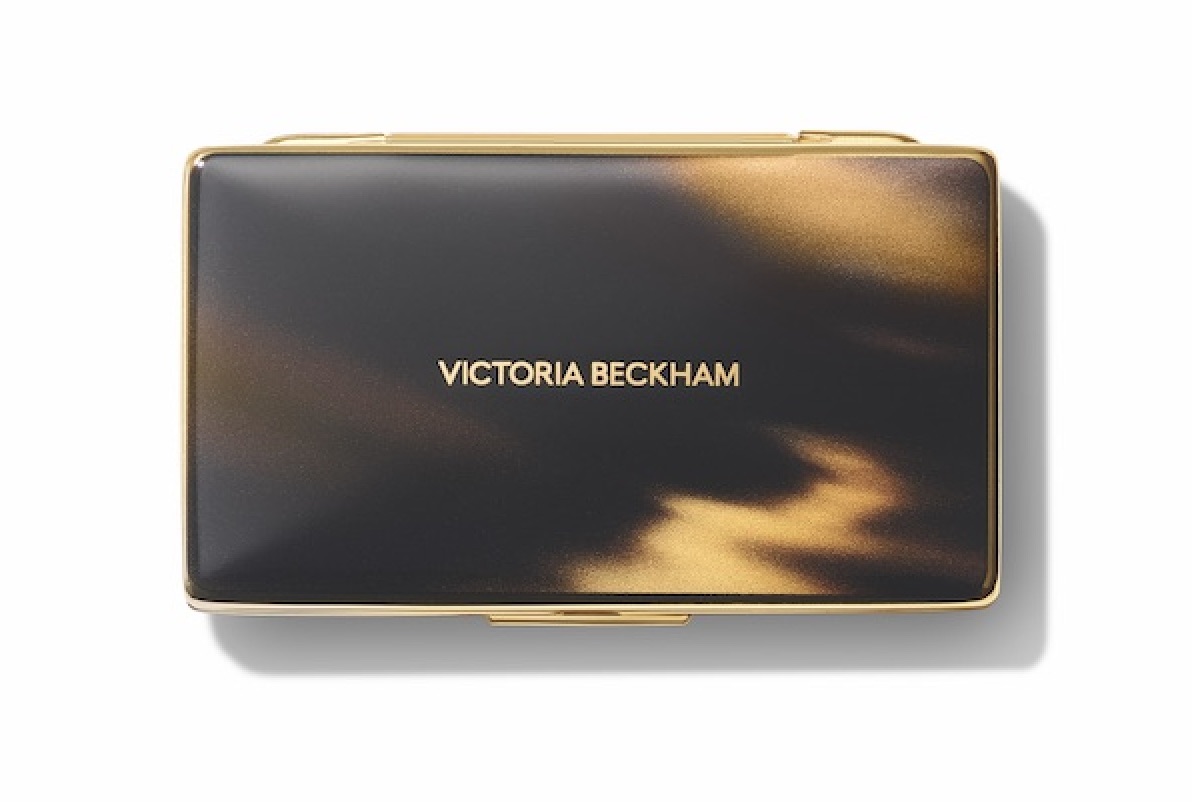
But back to the world of celebrity. This year, Beckham found herself in legal wranglings with Australian skin care brand Skinlab over the use of the letters ‘VB’. While the two letters in isolation seem harmless enough, when put together they form an acronym that to the Spice Girl-turned-entrepreneur represents not only her name, but her eponymous beauty brand Victoria Beckham Beauty or VB Beauty, which launched last year.
After spotting a registration for two trademark applications, ‘VB Salon’ and ‘VB Skinlab’ in March 2020, Beckham and her team pursued legal action. It was overturned by the government’s IP agency, IP Australia, which did not agree that the two marks were similar enough to cause consumer confusion.
Despite lodging an appeal with the Federal Circuit Court of Australia in April, Beckham eventually agreed to a settlement, which Joshua Marshall, Senior Associate, Intellectual Property at UK-based law firm Fieldfisher, thinks was for the best.
“Settling the case shortly after the appeal was probably a good result for all the parties as, it is hoped, the settlement was on mutually acceptable terms,” he tells Cosmetics Business.
But what could Beckham, or indeed Skinlab, have done differently, to have avoided such a scenario? “When launching a new product, it is always sensible to compile a freedom to operate assessment,” adds Marshall.
“This involves looking at what registered trademarks already exist, for example on the UKIPO database, which is a free and publicly available resource. It is also worth doing general market research into what products are being offered by competitors and the likelihood of a competitor taking issue with the name of your cosmetic.”
In this case, the fact that the two companies were operating in Australia is of importance, especially because Beckham did not have a registered trademark in the country for her beauty line. She argued that she had used the ‘VB’ acronym since 2016 and had built a reputation for the mark in relation to her fashion and accessories brand, however, limited sales figures for her beauty range meant a distinguishable reputation could not be proven.
“A UK trademark will only provide the owner with rights in the UK, while an EU trademark provides a unitary right across all EU member states,” explains Marshall. “For further global trademark protection, the company would need to file in other countries, such as the US, Canada and Australia.”
There is also the option to file for an ‘international’ application through the Madrid System, which Marshall advises is “cheaper and more efficient”. By doing so, an applicant can file one application with their local office, for example the UKIPO, and specify which countries it wants the trademark to be registered in. Application details are shared with the World Intellectual Property Office (WIPO), which has the power to grant a certificate, creating national rights for that mark.
What’s the deal?
Applying for a cosmetics trademark is essential to protect a brand, for example the name of a product or service. But what are the finer details?
A UK registered trademark protects against the use of an identical trademark on goods or services; a similar or identical trademark on similar or identical goods or services, and when that use is likely to cause consumer confusion; and a similar or identical trademark on similar or identical goods or services, where the trademark is reputable and the use harms or takes advantage of the trademark’s distinctiveness or reputation.
In more practical terms, a trademark allows an applicant to proceed to sell and license a brand, protect their products or services from counterfeiters and, in doing so, protect their company’s reputation, customers and earnings.
There are pitfalls to watch out for though, as Marshall explains: “One of the problems with applying to register the name of a cosmetic product as a trademark is the use of generic or descriptive words in the name, for example shadow, gloss or cream. A trademark must be distinctive of the type of product or service for which it is intended to be used. Often this forces applications to prove ‘acquired distinctiveness’, where the combination of words is inherently non-distinctive, but through use of the words, consumers have come to associate the words with a particular source of a product.”
Turn of phrase
This advice is especially poignant in light of a 2019 trademark application filed by social media sensation and beauty entrepreneur Kylie Jenner. The 22-year-old Lip Kit creator filed a trademark application for various categories, including cosmetics, with the US Patent and Trademark Office for the phrase “rise and shine”, which she was filmed singing to her daughter Stormi in a clip that subsequently went viral on social media.
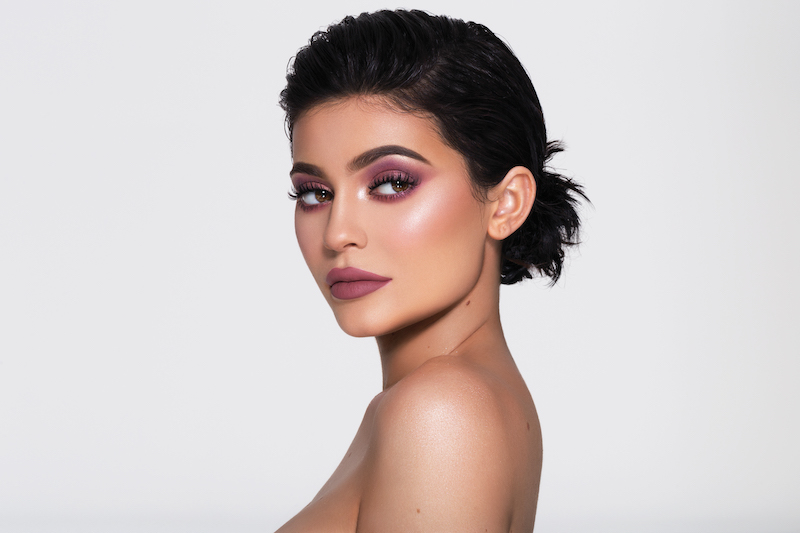
Kylie Jenner is the creator of the Kylie Cosmetics and Kylie Skin brands
But as soon as it was filed, those with legal knowledge were quick to weigh in with advice that the popular phrase might prove hard to ‘own’. Lauren Gregory, an Associate from US law firm Seyfarth Shaw, says: “Generally speaking, it is not possible to register a common term or catchphrase as a trademark in the US. For example, basketball star LeBron James was denied registration of ‘Taco Tuesday’ for a podcast and related entertainment services.” However, she adds: “Of course, certain phrases may be registrable in connection with specific goods or services under certain circumstances.”
Jenner tried to secure her chances by simultaneously applying to trademark the incorrectly-spelled phrase ‘Riiise and Shiiinnee’ too. But both applications have seemingly been abandoned and the latest records in the US Trademark Electronic Search System are all listed as ‘dead’; in the US, it is necessary to consistently check in on the status of trademark applications and registered trademarks, the latter at least once a year, and file requested documents or risk losing the rights to a mark or its application.
The issue appears similar in the UK, as Marshall explains: “Trademarking a catchphrase does not carry any wider protection than a usual trademark registration. However, careful consideration needs to be given when deciding whether to apply to register a catchphrase or common term or expression in the English language as a trademark because, unless the catchphrase is capable of distinguishing the goods or services of the applicant, the UKIPO will reject the application. This is because catchphrases and expressions are inherently generic.”
Avoiding legal battles
The trademark landscape in the US is, somewhat expectedly, littered with lawsuits.
In November 2019, direct selling beauty brand Mary Kay sued the US’ largest beauty retailer Ulta Beauty over a trademark for its Lash Love mascara. The brand claimed that Ulta had used the trademark, which Mary Kay registered in 2011, to sell a copycat mascara range boxed in packaging that mimicked Mary Kay’s.
Meanwhile, in January last year, pop singer Rihanna is reported to have sued her own father – with whom she is understood to have had a difficult relationship – after he created a company called Fenty Entertainment. The Barbadian singer argued that Ronald Fenty misled the public and damaged her own Fenty beauty brand by misrepresenting his own company as linked to hers.

Rihanna took legal action against her father over the use of Fenty
When it comes to legal action in the US, it is not always a simple case of ‘who owns what’, as both unregistered and registered marks qualify for protection. Gregory explains: “US trademark law offers protection for unregistered marks in addition to registered marks, and there is no registration prerequisite to bringing a trademark infringement lawsuit.
“That said, parties generally seek federal registration, because it affords a number of benefits, including notice to the public of claimed rights in a mark, legal presumption of ownership nationwide and exclusive rights to use the mark in connection with the goods and services identified in the registration.”
She adds: “In addition, and particularly relevant for international cosmetic companies, is the ability to register a mark with U.S. Customs and Border Patrol, which is empowered to seize infringing or counterfeit products before they reach US consumers.”
Knowing your market
So what are some of the pitfalls to beware of in the US? Gregory says that trademark law regarding cosmetics has evolved to avoid stepping on toes.
“In my experience working with clients in the cosmetics industry, I have learned that it can be difficult to obtain trademark rights for a brand name that is similar to any other company in the cosmetic space, whether or not that company markets the exact same product,” she says.
“An increasing number of companies offer a relatively wide range of beauty products, from skin creams to body wash to hair products to make-up, all under a single trademark.
“Therefore, consumers have come to view a wide range of products as likely to emanate from a singular source. In turn, US trademark law has evolved such that, for example, a hair care company will have to stay relatively far away from a trademark used for a make-up line in order to avoid the likelihood that a consumer will be confused and assume the hair care product and make-up emanate from the same source.”
For cosmetics companies going about their day-to-day, the importance of being able to confidently navigate trademarks is of increasing importance, as more brands break into the market and trademark application figures rocket.
But knowledge should not be reserved for the legal department alone. Gregory advises that marketing teams and anyone else involved in developing advertising or other promotional materials should also be properly trained up as unintentional slip-ups – such as using a mark as a noun rather than an adjective – could end up resulting in dilution of a company’s rights.
As the beauty market becomes increasingly global, with brands often trading in myriad markets, having official trademark protections in place that are sensitive to different jurisdictions is an increasing necessity. Being clued up on your competitors’ products and how to gain the right protections for your brand is the first step in what might be a lengthy, but undoubtedly worthwhile process. After all, whether you’re a multinational household name or a fledgling brand, landing on the wrong side of the law never gets any easier.
How to file for a UK trademark:
- File an application with the UKIPO at trademarks.ipo.gov.uk/ipo-apply. This includes a fee.
- In your application, you will need to specify the goods or services you want the trademark to cover. These are organised into ‘classes’.
- The application is processed by the UKIPO.
- The application will be advertised in the UKIPO's journal.
- Third parties have a chance to oppose the registration.
- If no oppositions are received within a two month period, the trademark is added to the register.
- A certificate of trademark registration is issued.
How to file for a US trademark:
- File an application with the USPTO at uspto.gov. This includes a fee.
- A company may file a use-based application, an intent-to-use application or an application for extension of a foreign registration in the US. If a registrant is foreign, it must be represented by US counsel before the USPTO.
- The application is evaluated by a Trademark Examiner. This a process can take months or even years if the USPTO requires more information or has to resolve opposition proceedings.
- The application is advertised in the Official Gazette.
- Third parties have 30 days to file an opposition to registration.
- Applicants must keep up with the filing of maintenance documents in order to keep the registration ‘live’.
- The USPTO issues a registration.
- Applicants should continue to monitor the status of their registration annually and in particular between the fifth and sixth year after registration, and between the ninth and tenth year in order to keep the registration ‘live’.


