
‘Reprogramming youth’ is not a slogan. It reflects a real shift in how beauty innovation is evaluated. Longevity beauty is moving from claim-first storytelling to mechanism-first substantiation.
Editors, retailers, and increasingly consumers want to see a credible link between what an ingredient does in biology and what a product delivers on skin.
A practical way to keep this grounded is to start from a map of ageing biology.
The updated ‘hallmarks of ageing’ framework describes 12 recurring drivers across tissues: genomic instability, telomere attrition, epigenetic alterations, loss of proteostasis, defective macroautophagy, deregulated nutrient sensing, mitochondrial dysfunction, cellular senescence, stem cell exhaustion, altered intercellular communication, chronic inflammation, and dysbiosis [1].
For skin, this map is useful because it separates drivers, responses, and outcomes.
The upstream drivers are deep and slow. The downstream outcomes are what we recognise as ageing: chronic inflammation, extracellular matrix changes, altered intercellular signalling, and microbiome drift.
The middle layer is where skin tries to cope with damage and stress but can become self-reinforcing over time: senescence phenotypes, mitochondrial stress, and mis-tuned nutrient sensing.
This middle layer is where longevity beauty becomes actionable without drifting into drug claims, because it is measurable and plausibly modifiable. [2].
That framing makes the question concrete. If visible ageing is a downstream outcome, where do we intervene to make skin recover like younger skin under stress, rather than just looking better in the short term?
Why skin is the best place to pressure test longevity
Skin is an adaptation organ. It sits at the boundary and takes repeated hits: UV, pollutants, friction, allergens, temperature swings, microbiome perturbations. Its job is not just to look good, but to restore equilibrium after disruption.
Ageing in the skin often looks like reduced recovery. Redness lasts longer. Barrier repair slows. Texture becomes less forgiving.
A stressor that a younger system clears quickly becomes a long-running signal in an older system.
So, a defensible definition of “reprogramming” in cosmetics is simple: shifting the odds that skin returns to baseline after stress.
Why peptides are the best fit for reprogramming youth?
If the actionable biology sits in the middle layer, the next question is modality. Why peptides, rather than small molecules, botanicals, proteins, or newer modalities?
We believe peptides are the best candidates because the middle layer is dominated by signalling.
Peptides are one of biology’s native signalling formats. They can bind, recruit, inhibit, or bias pathways with specificity that is hard to reproduce with complex mixtures.
In cosmetic science, peptides are often grouped by mechanism, including signal peptides, carrier peptides, enzyme-inhibiting peptides, and neurotransmitter-inhibiting peptides, precisely because their value is mechanistic control.
Peptides also sit in a practical middle ground for topical products.
Large proteins and growth factors can be potent in vitro, but they are fragile, difficult to formulate consistently, and face major delivery barriers.
Short bioactive peptides, such as matrikines and matrikine-like motifs, have been discussed as offering growth-factor-like effects with a more practical size and handling for topical use [3].
We are moving toward a world where longevity innovation stops being occasional and becomes continuous
The point is not that delivery is easy. The point is that peptides give a workable compromise between biological specificity and formulation reality.
Small molecules remain essential and proven. Retinoids are the obvious example. But for longevity framing, there is a trade-off.
Many potent small molecules act broadly, and chronic use on sensitive skin can carry an irritation risk and off-target effects.
Longevity, by definition, is repeated exposure. An active that people cannot tolerate consistently often fails in real-world longevity impact.
Botanicals and ferments can also be excellent, especially for barrier support and inflammation modulation, but they bring a different challenge: composition complexity and reproducibility.
Multi-component mixtures are harder to standardise, harder to mechanistically anchor, and harder to build a clean evidence chain around. Longevity claims reward ingredients where the mechanism and measurement can stay tightly coupled.
Peptides are not perfect either. Stability, degradation, and limited permeability are recurring constraints, and peptide delivery has dedicated technical literature [4] describing these barriers and formulation strategies to address them.
The difference is that these weaknesses are engineering problems that can be designed around systematically, rather than fundamental limitations on mechanistic precision.
How we design for the map
If peptides are a design space, the problem becomes search. The sequence space is large, and many candidates fail for predictable reasons: poor efficacy, instability, aggregation, or poor solubility.
We treat AI as a design workflow for reducing those failures earlier. The workflow has four steps: evidence structuring, generation, screening, and wet-lab feedback.
Evidence structuring means converting narrative biology into constraints we can design against.
We aggregate literature, patents, public datasets, and internal experimental results when available.
We use language models to answer specific questions: which pathways repeatedly link to senescence phenotypes in skin models, which stress conditions are used in photoaging and barrier disruption studies, and which readouts correlate with recovery rather than acute activation.
Generation means proposing candidates under constraints rather than sampling blindly.
We are not only asking for “an anti-ageing peptide.” We are also asking for sequences consistent with a chosen lever, such as senescence-associated inflammatory tone, nutrient-sensing and autophagy-linked stress response, or mitochondrial resilience under oxidative load.
Screening is where most candidates should die. We use predictive models to estimate developability before synthesis, including solubility, aggregation risk, stability under formulation-relevant conditions, and early bioactivity likelihood.
This step is what turns peptide discovery from craft into engineering.
Wet-lab feedback closes the loop. We validate with assays matched to the lever, and we insist on a chain rather than a single marker.
If we are working in senescence-adjacent biology, we examine senescence-associated markers and inflammatory factors with attention to phenotype shift rather than single-output suppression.
Only after we have mechanism-anchored signals do we translate them into functional outcomes such as barrier recovery behaviour, irritation recovery, texture metrics, and ECM-related measures. Then we translate to consumer-relevant outcomes.
That is the standard longevity beauty will increasingly be held to: a chain from map to mechanism to measurement to experience.
The future of skin longevity
We are moving toward a world where longevity innovation stops being occasional and becomes continuous.
AI will compress the cycle from ageing insight to peptide signal to human-relevant evidence, so skin-longevity products improve incrementally rather than waiting for the next trend.
In that future, “reprogramming youth” is not a claim; it is a capability: the ability to repeatedly design signals that shift recovery, resilience, and inflammatory tone in the right direction, then prove it with a chain from mechanism to function to experience.
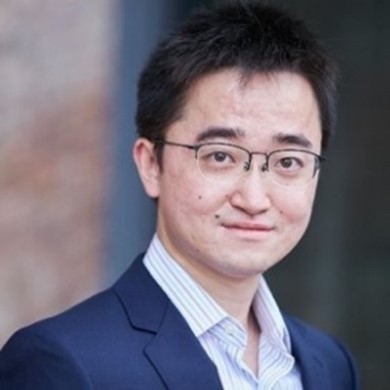
Dr Lun Yu, Co-Founder and CTO at Metanovas Biotech
Dr Lun Yu, Co-Founder and CTO at Metanovas Biotech, will present “Reprogramming Youth: How AI-Engineered Peptides Unlock Longevity Beauty” at in-cosmetics Global on Wednesday, 15 April, 16:45–17:15 in Technical Seminar Theatre 4, Hall 7, Level 3.
in-cosmetics Global 2026 will take place from 14-16 April at the Paris Expo Porte de Versailles, France. Find the full conference programme here. For more information or to register to attend, visit the website here.


