
What will consumers want in the coming years? What will be the next darling ingredient on the market? What colour will not leave people’s minds, mouths or eyes? These are some of the questions asked daily at Alkos Group, which sees the prediction of trends as one of its biggest challenges.
There is one trend, however, that is no longer a secret for either Alkos or any other company in the cosmetics industry: the growing and uninterrupted interest of consumers in vegan products.
Driven by millennials (26% of them already identify as vegan), the global market value of vegan cosmetics is expected to reach US$20.8bn by 2025.
What is ‘vegan’?
Despite the gradual demand for cosmetics without ingredients of animal origin, there is still no legal definition for labelling a product as vegan, natural or organic.
Because of the absence of global regulations and certificates, the lack of clarity when cataloguing products of this kind is huge.
A brand may not use animal ingredients (and thus be vegan), but, at the same time, could have a chemical composition and therefore not be natural. Similarly, an article may be vegan, but contain substances previously tested on animals. It may sound a little complex, but there is a logic behind it all:
Natural: One of the most used and sought-after terms within the beauty market, this is nothing more than a title given to a product which contains ingredients that have not been synthetically manufactured. But, thanks to the lack of regulation, companies can advertise their articles as being natural even if the natural, herbal or mineral components is only 1%.
Organic: Just like ‘natural’ cosmetics, an organic product needs only a small percentage of some organic compound to call itself such. There is, however, a certificate issued by the Soil Association, which certifies products that are supplied and manufactured with sustainable organic ingredients not tested on animals, free from harsh chemicals, nanoparticles, synthetic dyes, artificial fragrances and parabens.
This same association has invested in the creation of a new European label called COSMOS (Cosmetic Organic Standard), along with other institutions that certify organic products within the continent (such as BDIH in Germany, Cosmebio and Ecocert in France and ICEA in Italy).
Vegan: The darling of the moment has no legal regulations for its denomination. There is no rule which determines that if a product is vegan, instead of ingredients derived from animals, the substitutes used will be organic or natural. The truth is that this substitution can be made with only synthesised ingredients, made in laboratories. It is also common to think that, because they are sold as vegan, such products cannot be tested on animals. Being vegan, however, just means there is not any animal-based ingredient in the product, nothing more.
Cruelty-free: There is no way to talk about ‘vegan’ make-up without stepping into this topic. This label ensures that none of the substances used in a product’s manufacture have been tested on animals. On the other hand, there is no impediment to the product containing components derived from animal sources, such as glycerin (which serves to prevent premature loss of moisture from cosmetics, so that they do not dry out), honey (which functions as a skin conditioning agent), lanolin (which helps give the epidermis a smooth and soft appearance), collagen (which improves the appearance of dry or damaged skin) and gelatin (which provides benefits such as water resistance and ‘sweat-proof’). Consequently, even though ‘vegan’ and ‘cruelty-free’ tend to be used interchangeably, their meanings are completely different.
European Union legislation on animal experiments has been extremely strict since the continent banned them in 2013.
Then there is China, which represents the world’s second largest market of cosmetics and mandates that these tests have to be carried out. That is: any products manufactured or sold in the Asian country, automatically, will not have and cannot have the ‘cruelty-free’ seal.
For the moment, for products that are sold on the market as natural, organic or vegan, there is only one legal requirement, which is the listing of ingredients according to the INCI (International Nomenclature of Cosmetic Ingredients) standard. And, because of the lack of a clear demarcation on all these labels, the difficulty of interpreting the term vegan can become one of the main restrictions to manufacturers and consumers of make-up, soaps and skin care products in general.

Overcoming supply obstacles
Another obstacle encountered by manufacturers is to obtain from the suppliers of raw materials the certainty that during the production of components there was no residue of animal derivatives, directly or indirectly.
Likewise, two ingredients have brought some difficulty to producers of vegan cosmetics, one thanks to its wide and diverse use and the other because of the difficulty in finding a substitute that matches its quality: beeswax and carmine.
Beeswax is used in the formulation of a wide range of products, both for bathing, baby care, make-up, fragrances, hair products, nail and skin care products, as well as sunscreen and tanning products. It helps to keep an emulsion from separating into its oil and liquid components, especially in products that require a creamy consistency. It also increases the thickness of the lipid (oil) portion of solid products, such as lipsticks, giving them structure and allowing for smooth application.
When used in eye make-up, it strengthens but does not harden the product, aiding application through the wax’s flexibility and plasticity.
With the help of technology, this versatile component can be replaced by waxes that are not of animal origin. Among them, three provenance options are the best known and used: candelila wax, obtained from the Euphorbia cerifera plant, which grows in north-central Mexico and the Texas Big Bend area; carnauba wax, also known as Copernica cerifera wax; and, finally, Rhus succedanea fruit wax, or wax from Japan, produced from the fruits of the Rhus succedanea sumac, which grows both in Japan and China.
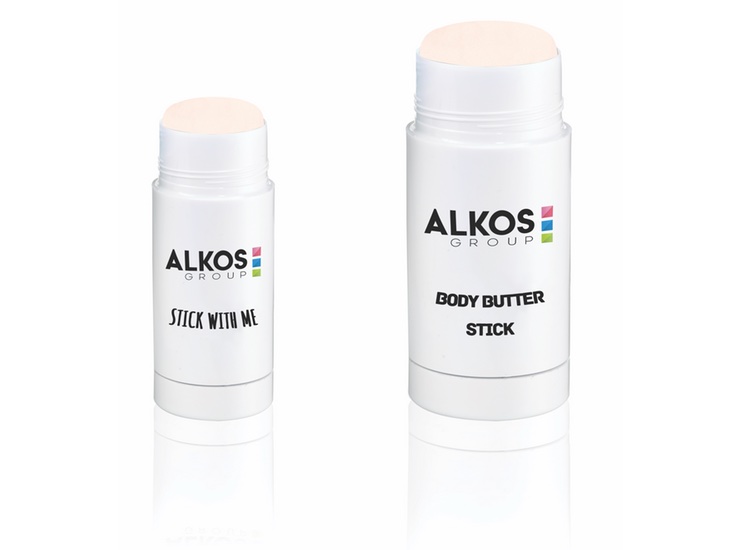
All of them bring the same effects and results as beeswax. This can be seen, for example, in some successful Alkos Group products using vegan waxes, such as So Wow Medium Twist and So Wow Lipstick; Stick With Me, a travel stick cleanser; and Body Butter Stick, a moisturising stick that was selected by MakeUp in NewYork to compete in its well-known Innovation Tree animation this year.
Carmine, also known as carmine acid, cochineal, crimson lake and natural red 4 (among other names), is often used to add vibrant, long lasting and intense tone colours to blushes, lipsticks and eye pencils. It is also the natural dye ‘go-to’ when you want to achieve more specific tones between pink, purple and red, avoiding the use of synthetic dyes.

The technique used to obtain this substrate has been the same since the time of Cleopatra: through the crushing of female cochineals. For greater accuracy, 70,000 cochineals (native to Mexico and South America) are necessary to obtain just 450g of the dye.
But, because of its history, colour and the lack of a real competitor in terms of pigmentation and quality, there are not many widely used vegan substitutes for carmine dye in make-up. However, this does not mean they don’t exist. Three of the most widely used possibilities are:
FD&C & lake dyes: These are the most popular synthetic dyes used in make-up. They are present both in manufacturing for the more traditional cosmetic brands and by the niche brands (indies) sold in natural boutiques. These pigments, if produced to good quality, do not dissolve in solvents, and generate bright and attractive colours. They are also stable against light, alkalis and acids, and bleed less in water.
Iron oxides: These are of natural origin. But, as the name suggests, their existence comes from the oxidation process of iron, also known as rust. Colours include a variety of red powders, yellows, browns and shades of black. The only inconvenience is that the reds and yellows of the oxide are always ‘orangey’ and warm, so they are contraindicated for cool tones.
Fruit & vegetable dyes: Working with these can be a bit tricky. When you leave a piece of fruit out of the refrigerator it gets brownish. This change of shade, known as oxidation, happens 100% of the time fruits or vegetables are exposed to air. And the warmer the weather, the faster this process.
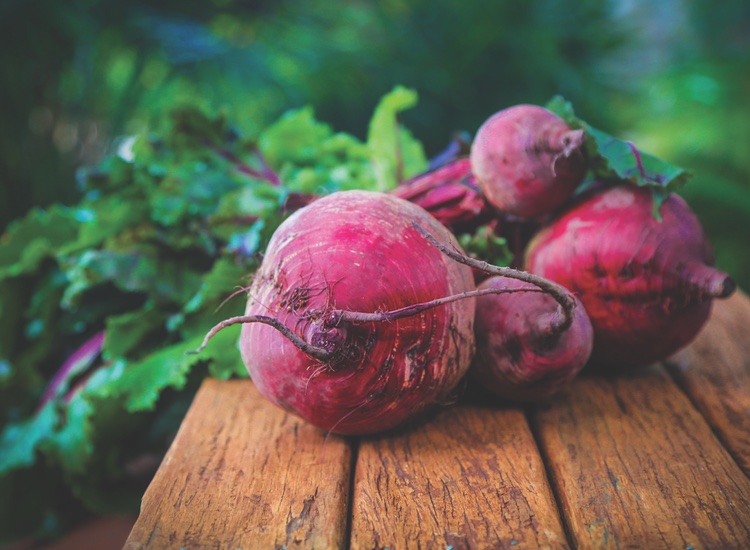
However, most fruits and vegetables of more intense colours, such as beets and purple potatoes, produce a pigment that can be used in cosmetics. Yet – and here is the big problem – this pigment only works in water-based formulas, and most make-up products, especially for lips and cheeks, are based on oil. So the possibility of a vegetable dye being responsible for the pink magenta coloration on a lipstick is almost nil.
Difficult-to-replace ingredients; lack of clarity for the categorisation of labels; attempting to maintain quality production without raising the average market price... manufacturing vegan cosmetics is not one of the easiest tasks, but it is an extremely important one to keep any company on-trend.
It is believed, however, that this path will become easier to tread over time; the greater the demand from the public, the greater the supply of technology for raw materials. After all, as Anna Lappé, a lawyer specialising in food justice and sustainability, would say: “Every time you spend money, you’re casting a vote for the kind of world you want.”
This trend was anticipated by the Alkos Group, which offers a catalogue of majority-vegan products. The group’s next bet is on products that are not only vegan, but also 100% natural; because, just to add a bit of Fernando Pessoa’s poetry, sailing (and anticipating trade needs) is necessary.
Author
Regina Soares Valverde, Alkos Group
www.alkos-group.com


