
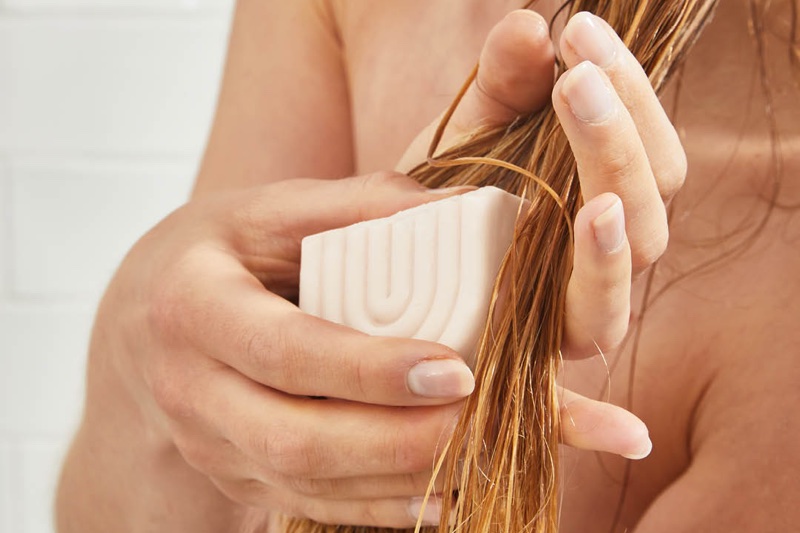
Beauty bars were predicted to take off at the start of the decade, so why is the format struggling to gain altitude?
Cast your mind back to 2020 when Garnier kicked off the solid shampoo revolution.
The L’Oréal-owned label was by no means the first to drop a shampoo bar – Lush is famed for its packaging-free, ‘naked’ goods, while relative newcomers like Ethique and KinKind were also generating buzz for their solid formulas.
But with its Ultimate Blends Shampoo Bars, Garnier became the first mass brand to enter the solid shampoo race.
This industry breakthrough was swiftly followed by the likes of Procter & Gamble across its Head & Shoulders, Pantene, Herbal Essences and Aussie ranges, and Wella via its (then brand new) weDo/ label.
Now, high end hair care brands as diverse as Davines and Percy & Reed offer hair cleansing options you can pop in your soap dish.
And progress hasn’t stopped at shampoos.
There are solid moisturisers (like those from Ethique and Lush), conditioners (Kitsch, Beauty Kitchen and Faith in Nature), deodorants (Fussy) and fragrances (Jo Malone London, Diptyque and Glossier) – not to mention make-up sticks from the likes of Fenty Beauty, Rare Beauty and elder-millennial fave Merit.
And all of this newness sits amid a market that’s allegedly receptive to non-traditional cosmetics and personal care.
According to Mintel, 65% of UK facial skin care users last year said they would be willing to experiment with new formats.
Additionally, Mintel 2023 data says 30% of US consumers who use hair care products are interested in solid shampoo or conditioner.
The global shampoo bar market’s 2023 worth is projected to be $10.53m, accounting for just a fraction of the gargantuan $34.46bn overall shampoo market
So why then, compared with the glut of liquid hair care formats available, do solid versions remain thin on the ground?
According to Fortune Business Insights, the global shampoo bar market’s 2023 worth is projected to be US$10.53m, accounting for just a fraction of the gargantuan $34.46bn overall shampoo market (the projected 2023 figure from Fortune Business Insights).
Moreover, the shampoo bar market’s projected CAGR from 2023-30 is 5.3% – a slower predicted growth rate than the 5.6% for the market as a whole.
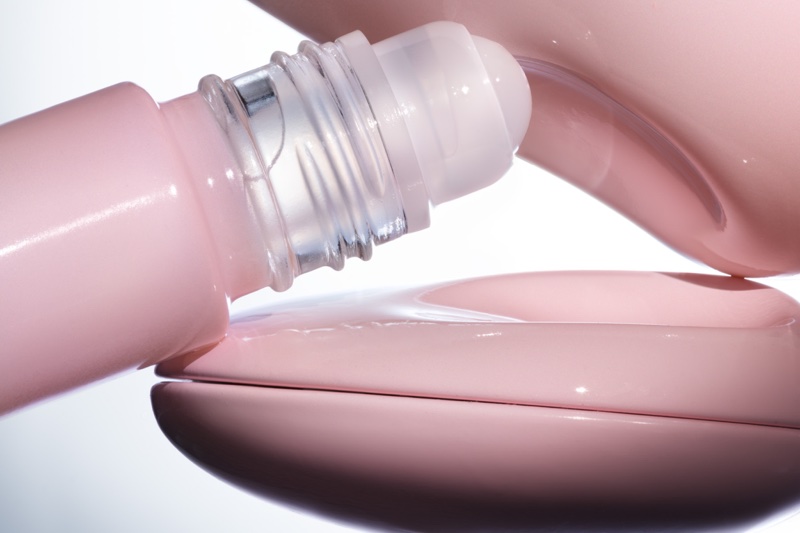
Glossier is one of the brands offering solid format fragrance
And while the global bar soap market grew year-on-year in 2022 to reach $16.7bn, according to market research specialist Euromonitor International (with the market in 2023 projected to be worth $17.7bn), the vast bulk of this figure is made up by emerging markets.
North America, for example, accounted for less than $2bn of 2022’s figure, while Western Europe’s bar soap market was only worth $782m, suggesting that trend-led consumers in mature markets are not this category’s growth drivers.
“Solid formats saw a rise in prominence during 2020-21 as retailers and brands started to introduce and focus on this segment, which led to strong consumer uptake,” says Connor Spicer, Senior Research Analyst, Beauty Research at Euromonitor.
“However, preference towards other formats, particularly in hair care, led to low levels of repurchase and subsequently lower demand for this product type.
“It has appeared that there has been a reluctance among consumers to go back to this category since.”
What’s keeping solids down?
So what is stymying growth?
“Solid formats, in categories that have steadily been commercialised in liquid format through the last decades, seem to still be going through an experimental stage, for both brands and consumers,” says Timo von Bargen, co-founder of beauty ingredient sourcing platform Covalo.
“Consumers are curious, however many barriers are still leaving them reluctant to try or permanently shift.”
On the brand side, he adds: “Because demand hasn’t picked up at a larger scale, many brands haven’t gone ‘all in’, turning some of the consumer concerns into a self-fulfilling prophecy.”
From a purely water saving point of view, solid shampoo and conditioner bars can be really challenging to lather
Commenting on bars’ sluggish uptake, Kristal Goodman, Head of Product Innovation at THG Labs, tells Cosmetics Business: “I think it all comes down to efficacy and ease of use.
“From a purely water saving point of view, solid shampoo and conditioner bars can be really challenging to lather.
“All the while your shower is running and any water saving you hoped to make is hugely outweighed by the increased shower time.
“I think performance is king when it comes to hair care and early adopters may well have been put off by the first versions of these products.”
Additionally, Goodman notes that bars can be difficult to store in a steamy bathroom environment.
“They can get messy and a large amount of product gets wasted as they slowly dissolve,” she says.
Von Bargen observes that consumers shifting from liquids to solids may view a change in behaviour and routine as a barrier, while “there can be a perception that solid products may not lather as well, spread easily or provide the same level of efficacy”.
He adds that, in reality, this varies depending on the specific formulation.
Why beauty needs bars
Offsetting these issues are bars’ environmental benefits.
“The solid format offers benefits such as reduced packaging waste, easier transportation and prolonged product durability,” notes Maria Lobo Maia, General Manager of the industrial unit at Portuguese solid personal care products manufacturer Groupe GM.
“One of the main advantages of solid format products is their reduced environmental impact compared to liquid alternatives.
“A good solid format product should be packaged in eco-friendly and recyclable materials, or even have minimal packaging altogether.”
From a formulation perspective, “water is the primary ingredient in many personal care products” and “eliminating the need for water as a main ingredient can contribute towards water conservation efforts”, says Covalo’s von Bargen.
Meanwhile, “adding water only at the activation moment, or not at all, makes solid formats more compact and lightweight, reducing transportation- related carbon emissions compared to liquid products”, he adds.
While the ecological advantage of this format is clear, Euromonitor’s Spicer observes that consumers often overstate their desire for green goods – which might further explain beauty bars’ slow uptake.
Adding water only at the activation moment, or not at all, makes solid formats more compact and lightweight, reducing transportation- related carbon emissions compared to liquid products
“Although consumers do care about the environment and would like eco-friendly purchases, price and efficiency still take priority for consumers particularly during this period of financial difficulty,” he says.
“Consumers will often say they care about the environment in surveys, but this often doesn’t align with their purchase habits and decisions, and this is something we have seen globally over the last two years. Consumers would like to be more eco-friendly but cost or effectiveness has prevented them from doing so.”
That said, beyond sustainability, consumers benefit from the fact that such products are compact, lightweight, not subject to liquid restrictions on aeroplanes and are less likely to leak during transit.
Moreover, looking at ingredient trends, von Bargen notes that because solids are less susceptible to microbial contamination (since microbes and bacteria grow more easily in an aqueous medium), fewer additives or preservatives are needed.
Formulation focus
For the experts, the success (or not) of beauty bars/solid formulations balances on whether they can offer equivalent or better efficacy than consumers’ current faves.
As von Bargen tells Cosmetics Business, “consumers are unlikely to drop their current products to adopt something suboptimal, that is less suitable for their personal needs or with lower efficacy to address those specific needs”.
The claims on solid cosmetics, as well as the variety of functions and consumer needs covered, are still far from the regular offer seen on the high street, he adds.
“How many solid face ‘creams’ with SPF can be found in the market?” he asks.
“How many shampoo bars that cater for an itchy scalp? How many toothpaste pills that promise to whiten teeth up to four shades?”
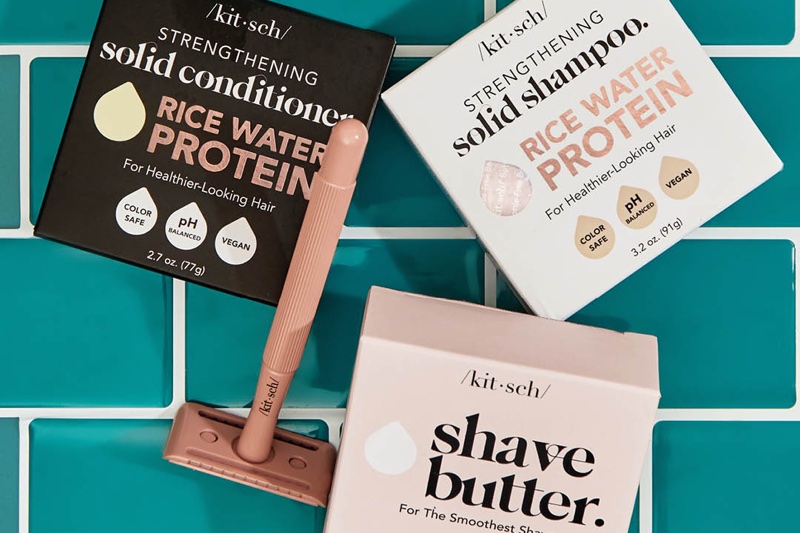
The key ingredient in Kitsch's solid shampoo and conditioner is rice water protein
“A large majority of the most widely known and available brands have not developed a range of solid products that can in any way outshine, or even match, their regular, liquid ranges,” confirms THG Labs’ Goodman.
“This is a chicken and egg problem.
“Brands need to test the waters before fully transferring the technology and know-how they have across the board into their solid formats.”
For Goodman, while formulating solid and hot pour (stick format) products is “not easy”, the biggest issue affecting the quality of the finished product is scale-up, with Goodman adding that brands should “work closely with [their] scale-up team and line setters to ensure heating and filling temperatures can be maintained”.
On top of this, “cooling rates and conditions also drastically affect the texture, solidity and stability of the final product”, Goodman says, noting: “Make sure you do full pilot batches and fill trials in all the potential packaging sizes needed, as this will affect cooling rates.
“Once you have all of the information to consistently produce the same quality of product, ensure your filling line specifications are detailed and specific,” she adds.
Raising the bar
Beyond fixing these formulation pain points, improving consumer education, marketing and packaging could help inject life back into solid formats.
Von Bargen recommends staging educational campaigns, for example “placing side-by-side on the shelf a liquid product and its solid counterpart, with the same branding and performance claims”, to stress the efficacy parity of the solid product, or to “introduce sample programmes or trial-size products” for consumers to test.
When it comes to ease of use, KinKind’s October 2023 Who Cares? Who Does? report – the plastic-free brand’s fifth – found 93% of users store their bars on a rack, draining dish or in an open storage tin at home, and the brand identified storage as a key component in encouraging consumers to make the switch from bottled to bar products.
Last year, Kitsch’s Rice Water Protein Shampoo Bar became the number-one best-selling shampoo on Amazon across all shampoos
Then there is the role social media can play in boosting the reputation of a hero ingredient-containing bar product and, by extension, the category.
Last year, Kitsch’s Rice Water Protein Shampoo Bar became the number-one best-selling shampoo on Amazon across all shampoos.
It likewise topped Google searches for ‘shampoo’ for the past 12 months, having gone viral on TikTok, for which a spokesperson says its strategy “revolves around maintaining an authentic and relatable presence”.
The key ingredient in its solid shampoo and conditioner is rice water protein, which is said to work in a similar way to how protein helps build healthy muscle, only on hair: it encourages hair growth, strengthens hair, boosts shine and locks in moisture.
“Rice water protein is a fantastic ingredient for hair care,” the spokesperson tells Cosmetics Business.
“It’s rich in amino acids, vitamins and minerals, which are essential for hair health.
“By offering a well-known ingredient in a new form, we make it easier for customers to feel comfortable trying something different, blending reliability with innovation.”
Another approach to encouraging the green swap-out of bottled products is to be flexible and innovative with your ideas.
As von Bargen observes: “If consumer research shows that a liquid format is more preferable for products such as shampoo and conditioner, then the focus can be shifted towards developing a solid format that can be diluted at home with clear and easy-to-follow instructions.”
He says Covalo expects to see a shift from bars to more innovative solid formats that consumers may feel more accustomed to using, such as powder or capsule concentrates that can be diluted at home into a liquid format.
Overall, given the various strategies solid format brands can adopt to overcome consumer hesitation, von Bargen is optimistic about the future of solids.
He tells Cosmetics Business that more than 20% of the solid cosmetic formulations on its Covalo x in-cosmetics ingredients platform (a collaboration with beauty materials trade show in-cosmetics) were launched in the past year.
“This is not only a clear indication of an increased demand for solids from brands, but also a positive sign that ingredient suppliers are actively working on making solid formulation more accessible.”


