

This article was originally published in the Hair care Trend Report. Receive your copy here
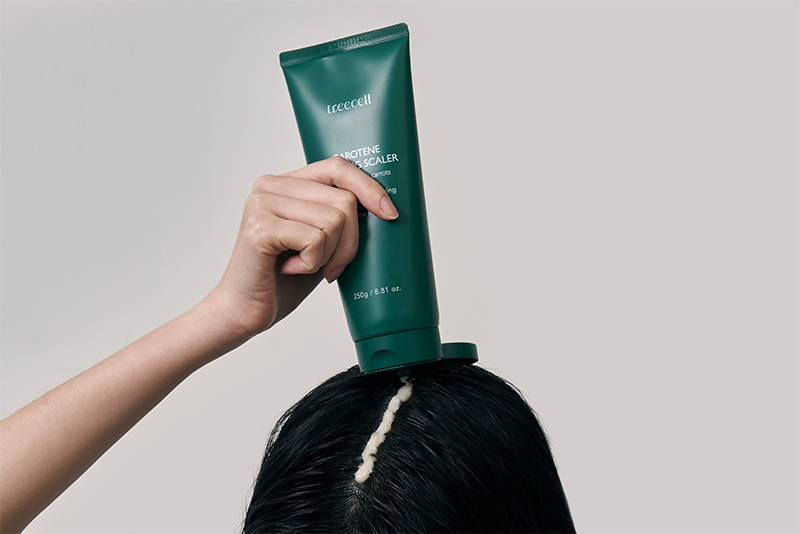
Unless you are a deep-dive K-beauty enthusiast, you may not have come across scalp scalers. Springing out of traditional Korean hair care philosophy – known for treating the scalp as skin – a scalp scaler is a liquid or gel exfoliant that is used before shampooing to target buildup from sebum or styling products, pollution particles and dead skin.
The products are often salt-, AHA/BHA- or enzyme-based, and they help maintain an ideal ecosystem for hair follicles, says Melody Yuan, founder and CEO of K-beauty retailer Skin Cupid: “By exfoliating the scalp, they promote healthier hair growth and pave the way for nutrients to work.”
Unlike generic hair scrubs or clarifying treatments, scalp scalers are positioned with a microbiome-first framing, says Yuan. She says: “rather than just stripping oil, the better formulations are designed to work with the scalp’s ecosystem: maintaining a slightly acidic pH that helps good microbes flourish and keeps itch and flakes at bay, offering non-stripping exfoliation via gentle AHAs and BHAs, and chelating environmental impurities by binding to minerals. That’s a more precise, almost dermatological approach than a physical sugar/salt hair scrub, which tends to just mechanically buff without addressing pH balance or microbial health.”


