



Latin America is the place to be for beauty brands.
A flurry of launches in the region in the past 12 months include beauty brands and retailers, while major players and suppliers are ramping up their presence in the area too.
Hailey Bieber’s Rhode expanded to Mexico earlier this month, marking its first entry into Latin America, but it is “just the first step”, Bieber said.
Charlotte Tilbury’s entry into Mexico last May was singled out as one of the growth drivers for the brand in owner Puig’s 2025 results published in February.
For its first expansion beyond the US, beauty retailer Ulta Beauty’s chose Mexico – a “significant international market”, according to President and CEO Kecia Steelman – and where its bricks-and-mortar store opened in September 2025.
Have you launched an innovative product, brand or campaign in the past 12 months? Then you could be in with a chance of winning at this year's new and improved Pure Beauty Awards 2026. Click here for more information.
Shortly after this, Estée Lauder Companies (ELC) launched its flagship Estée Lauder brand on Amazon Mexico’s Premium Beauty Store, hot on the heels of the skin care brand debuting on Amazon in the US and Canada.
The country is “one of the fastest-growing prestige beauty markets in Latin America”, according to ELC’s Global Brand President Justin Boxford.
ELC stablemate The Ordinary also debuted on Amazon.com.mx last year.
The online giant’s Director of Consumer Goods Hernando Moncaleano said at the time: "The beauty segment in Mexico is experiencing a moment of great growth and innovation.”
The US beauty giant also backed Mexican luxury fragrance brand XINÚ – ELC’s first investment in a Latin American brand.
“Mexico has become a vibrant hub of fragrance innovation – a place where craftsmanship and cultural relevance come together in remarkable ways,” said Stéphane de La Faverie, President and CEO of ELC at the time.
Meanwhile, Swiss fragrance supplier Givaudan acquired a majority stake in Brazilian fragrance house Vollmens Fragrances to strengthen its regional growth in Latin America.
Plus, France-headquartered cosmetics packaging firm Albéa acquired Amfora Packaging to boost its presence in the region, which it said was one of the fastest-growing markets for beauty and personal care.
So, it is no wonder that more and more beauty brands are clamouring to claim a foothold in the region.
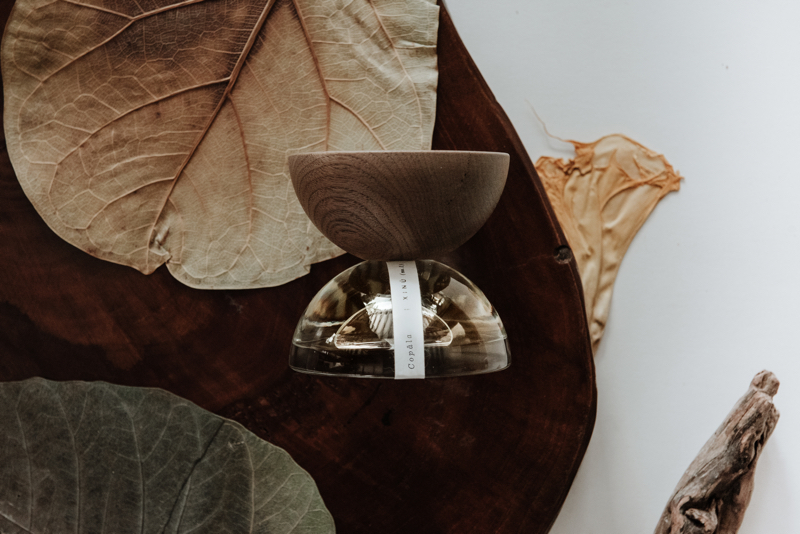
A bottle of Xinu fragrance
“Latin America is one of the most structurally attractive beauty growth stories in the world today,” says Philippe Gorge, Partner and Head of European Health and Beauty Practice at L.E.K. Consulting.
“While the global majors are already fighting hard there, it remains the region that mid-sized international and indie brands consistently treat as a phase three afterthought, which is precisely the opportunity.”
Latin America outperforms the global beauty market
The global beauty market is expected to grow 5% annually through to 2030, according to management consultants McKinsey in its recent report, From Aisle to Algorithm: The Beauty Categories, Channels, and Concepts Shaping 2030 Growth.
Growth is expected to be strongest from emerging markets, including Latin America, where it says consumers are becoming wealthier and demand for beauty products is increasing.
“Latin America is an important player in the global beauty landscape, particularly driven by strong local mass brands in markets like Brazil,” says Ana Seccato, Director, Latam Beauty Analyst at analyst Circana.
“However, within the prestige segment specifically, the region is still relatively underpenetrated, representing approximately 6% of global sales.
Compared to more mature regions, such as North America and Europe, Latin America remains an emerging market with significant room for growth
“Despite its smaller share, Latin America has consistently outperformed global growth rates in recent years, positioning it as one of the fastest-growing regions for prestige beauty.
“This growth is fuelled by a highly trend-connected consumer base, increasing premiumisation and expanding distribution.
“Compared to more mature regions, such as North America and Europe, Latin America remains an emerging market with significant room for growth.
“This is precisely why it has become a strategic priority for major global beauty conglomerates.”
Indeed, L’Oréal is already seeing standout growth in the region, where sales grew 8.3% to US$3.3bn in 2025, ahead of global sales growth of 3.5%.
The region accounted for 7.4% of L’Oréal’s total sales and was its second fastest-growing region behind South Asia Pacific, Middle East and North Africa (SAPMENA).
However, local players are competing too.
Local versus global
Natura has simplified its business to concentrate solely on the Latin America market, including selling off parts of its Avon business and relaunching the heritage brand in Brazil and Mexico this year.
“The competitive picture is unusually dynamic,” summarises Gorge.
“Natura, the home-grown champion, has retrenched from a debt-laden global empire to refocus almost entirely on its own region, just as L'Oréal tightens its grip, [as] Brazil and Mexico are now among L'Oréal's largest growth contributors worldwide.”
Seccato says: “The Latin America market is concentrated in big players, led by a combination of strong local players, with traditional direct-selling companies and well-established global conglomerates.
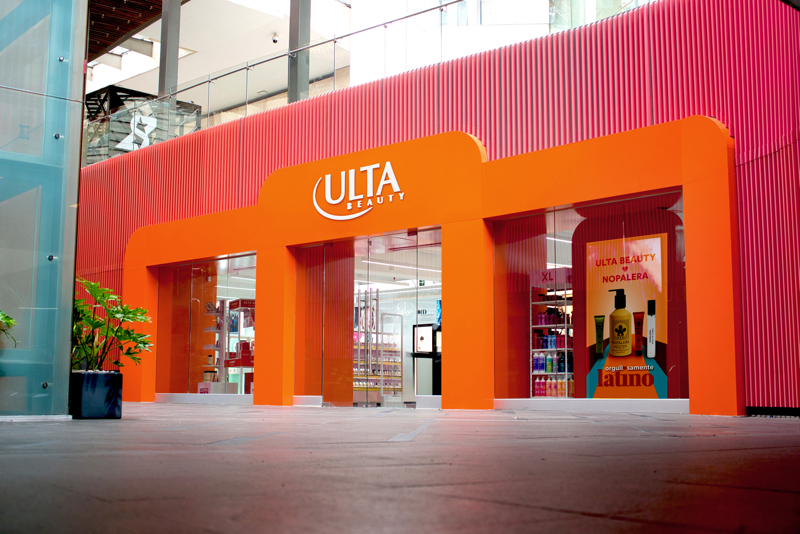
Ulta's first shop in Mexico
“However, what we are seeing is a market that is expanding both in size and in number of brands, with the dominance of the top players gradually declining in recent years and a higher growth coming from players outside the top tier.
“Among these winning brands, we see local players that remain highly competitive on pricing, partly supported by structural advantages, such as lower tax burdens versus international brands.
“At the same time, there is a growing presence of non-mainstream entrants, including brands from regions such as the Middle East in fragrances and Asia in skin care.
“In parallel, evolving channels such as marketplaces and social selling platforms are lowering barriers, enabling a broader set of brands to scale more quickly across the countries.”
Latin America’s e-commerce boom
E-commerce is expected to be the biggest channel in terms of growth in Latin America, but retail remains important too.
“The region is still predominantly offline but digitising far faster than physical retail,” says Gorge.
McKinsey estimates that beauty retail sales via e-commerce are expected to grow by around $7bn between 2025 and 2030.
Speciality beauty retail sales are forecasted to grow by around $3.5bn in the same period, and $2.5bn in drug stores.
Beauty sales in travel retail and department stores are also expected to grow by around $1bn and $0.5bn respectively.
Social selling platforms are also gaining traction, creating new pathways for discovery and purchase, and driving incremental consumption
The channel dynamics have been evolving quickly, according to Seccato.
“For beauty retail, we have the expansion and entry of beauty specialised players: Ulta Beauty entering Mexico in 2025, Sephora with a strong expansion plan in Brazil, Blush Bar (from Colombia) expanding to Peru and Mexico, and DBS (from Chile) entering Peru, as well as other local players trying to gain ground in the region,” says Seccato.
However, online has become the most dynamic channel it seems.
“Representing 25% of total sales, its performance has been driven by marketplaces that are consolidating their role as a key access point for prestige beauty, enabling brands to scale more quickly and reach a broader consumer base,” Seccato continues.
“In parallel, social selling platforms are also gaining traction, creating new pathways for discovery and purchase, and driving incremental consumption.”
Notably LVMH’s private equity arm L Catterton recently combined two businesses in Brazil – Bel Cosméticos and Mundo do Cabeleireiro – to build the country’s largest beauty retail platform.
Plus, Chanel launched e-commerce capabilities in Mexico and Argentina in 2025.
Fragrance and hair care dominate
When it comes to categories, fragrance and hair care are particularly strong, along with performance in skin care.
“The categories that define the region are fragrance, textured and curly hair care, where the majority of Brazilian women have textured hair and professional hair care is one of the fastest-growing segments anywhere, and clinical dermo-skin care led by La Roche-Posay and CeraVe,” says Gorge.
L’Oréal also made significant investment in its hair care operations, according to its annual report with “major projects” in Latin America in response to “strong growth” in the category.
Plus, the beauty giant noted that the boom in men’s personal care was a particularly noticeable trend in emerging markets, such as Latin America and especially in Brazil.
“Fragrances is the top category for the prestige market in Latin America, representing more than 50% of sales for all measured countries,” says Seccato.
“However, main sources of growth for the past two years has been hair care that already accounts with a big penetration in the region, but has been sustaining its performance with cross-category approaches, such as ‘skinification’ – usage of skin care ingredients or additional steps in the routine that goes beyond the traditional shampoo and conditioner.
“In addition, there is an increasing focus on scent within hair care, with many brands introducing hair perfumes, or emphasising fragrance as a key product benefit, leveraging its importance for Latin consumers.”
Country differences
However, it must not be forgotten that the Latin America market is made up of multiple countries, all with different dynamics.
“While commonly treated as one, Latin America is not a homogeneous market, with significant differences across countries in terms of channel structure, digital maturity and category dynamics,” explains Seccato.
“From a channel perspective, markets like Chile, Peru and Mexico are more concentrated in traditional department stores, while Brazil and Argentina have historically been driven by perfumeries, shaping a more fragmented and specialised retail landscape.”

The Amazon has inspired homeegrown brand Natura
Digital adoption also varies across regions, notes Seccato.
“Brazil stands out as one of the most advanced markets in the region, where ecommerce has played a critical role in driving growth even pre-pandemic, due to its continental scale,” she says.
“Category dynamics further highlight these differences.
“For example, make-up holds a stronger position in Brazil, supported by the presence of local influencer-led brands within prestige channels.
“Meanwhile, other markets in the region tend to be more focused on skin care, reflecting different consumer priorities and levels of category development.”
Gorge echoes this sentiment, noting the key differences between two of the region’s biggest country markets, Brazil and Mexico.
“Brazil, the anchor of the region, is growing at a mid-single-digit rate that runs ahead of the global beauty market,” he says.
“It is already the world's fifth-largest beauty market, and it is the second-largest fragrance market after the US, where perfume is a daily ritual rather than a luxury.
“Mexico is the standout premium engine, where a strong peso and an increasingly sophisticated consumer have driven double-digit growth in premium beauty, while Argentina is a reminder that this is not one market but many, each with its own macro story.”
He concludes: “The single most important message for any brand entering is that Latin America is not one market.
“Brazil offers scale, but a genuine regulatory and operational runway; Mexico offers premium momentum; and the brands that win localise their proposition market-by-market rather than treating the region as a single bloc.”


