

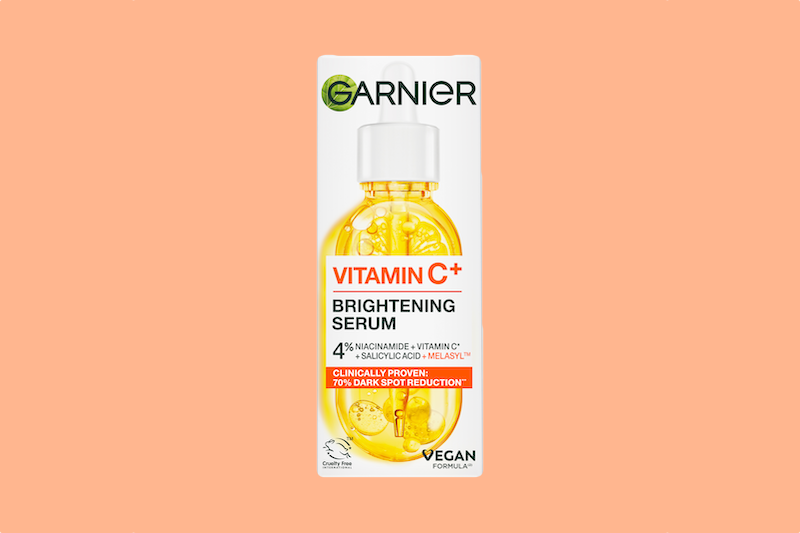
UK watchdog the Advertising Standards Authority (ASA) has banned a video-on-demand advert for Garnier’s Vitamin Cg Serum for being potentially misleading.
The L'Oréal-owned beauty brand’s advert, which aired on 28 October 2025, was challenged by the ASA on whether the claim “clinically proven to reduce hyperpigmentation in two weeks” was misleading and could be substantiated.
The brand’s video featured a model holding a pack of the product to the camera and then using it on her skin, showing a close-up of a dark spot on her face highlighted by computer graphics.
Small text at the bottom of the screen throughout a majority of the advert also stated, “** 72% of 111 women agree. Clinical study, 44 subjects 10 weeks”.
In response to the assessment, L’Oréal UK said that the qualification in the advert was, by error, inaccurate, and the correct qualifier for that claim should have been “**Clinical study, 44 subjects, 10 weeks”.
L’Oréal UK added that the error could have led to “consumer confusion between subjective and objective claims”, and that the qualifier would not appear in its current form in future communications.
A L’Oréal UK spokesperson told Cosmetics Business: “We have received the ASA’s ruling on Garnier's Vitamin C Serum, and while we respect their decision, we are naturally disappointed as we stand firmly behind the science and the testing results for this product.
"To ensure this serum worked for everyone, we carried out a thorough clinical study, specifically designed to test its effectiveness at reducing dark spots.
“We know that hyperpigmentation and dark spots can be made worse by sun exposure, and our study was carried out in a sunnier climate – while making sure to include a broad range of skin types.
“This approach is in line with the industry standards for this type of research.
"The clinical study clearly demonstrated that the serum works, and eight out of ten people who took part saw a visible reduction in their dark spots – and those results were robust and scientifically validated.
“While we respect the ASA’s role and will follow their guidance, we remain proud of this formula and the results it delivers for our consumers every day."
How did UK watchdog the ASA come to its decision?

The ASA assessed the advert based on the updated wording and evidence provided, which included an unpublished clinical trial and a published paper on the ingredient Melasyl.


