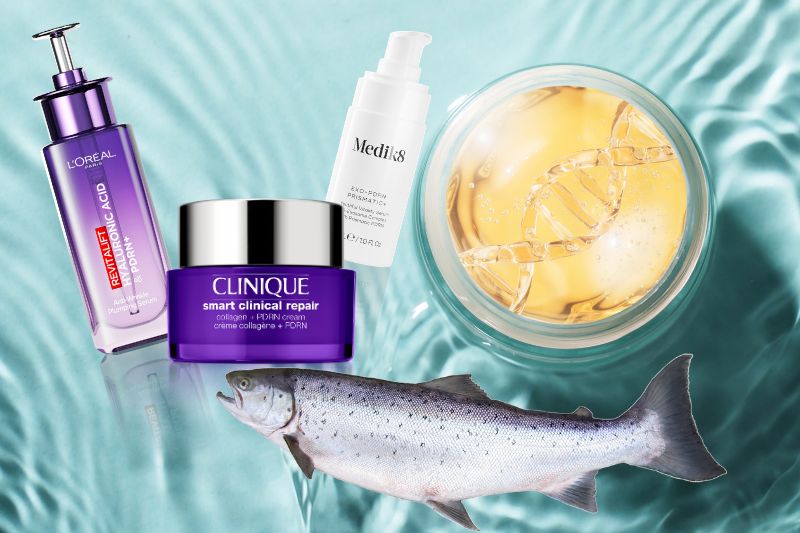
One of the first questions I ask when a new ingredient or formulation lands on my desk featuring PDRN on the label is, “Is this real PDRN?”
PDRN has moved rapidly from regenerative medicine into serums, creams, masks and scalp treatments.
After reviewing more than 50 PDRN technologies and finished products, I found marine DNA, recombinant sequences, bacterial fermentation, microalgae and plant-derived nucleic acids carrying the same four letters, despite not being biologically interchangeable.
Tickets are now available for the 25th anniversary of the Pure Beauty Awards, taking place on 15 October 2026 at the Grosvenor House Hotel in London, UK. Join the beauty industry for an evening of recognition and celebration as this year’s winners are revealed. Click here to secure your place.
As a cosmetic scientist with more than 16 years in formulation and ingredient evaluation, I find PDRN fascinating. It connects molecular biology with cosmetic formulation, while exposing the distance between an exciting mechanism and a proven topical benefit.
PDRN stands for polydeoxyribonucleotide: a mixture of purified DNA fragments traditionally obtained from salmon or trout reproductive tissue.
PDRN does not rewrite human DNA. Its proposed activity involves the adenosine A2A receptor, associated with inflammatory regulation and repair signalling, and the salvage pathway, through which stressed cells reuse nucleotides for DNA synthesis.
I think of PDRN less as giving skin a new instruction manual and more as supplying some of the vocabulary and raw materials required for repair. Much of its scientific reputation comes from pharmaceutical research involving injections or compromised tissue.
The moment PDRN enters a cosmetic serum, the question changes.