

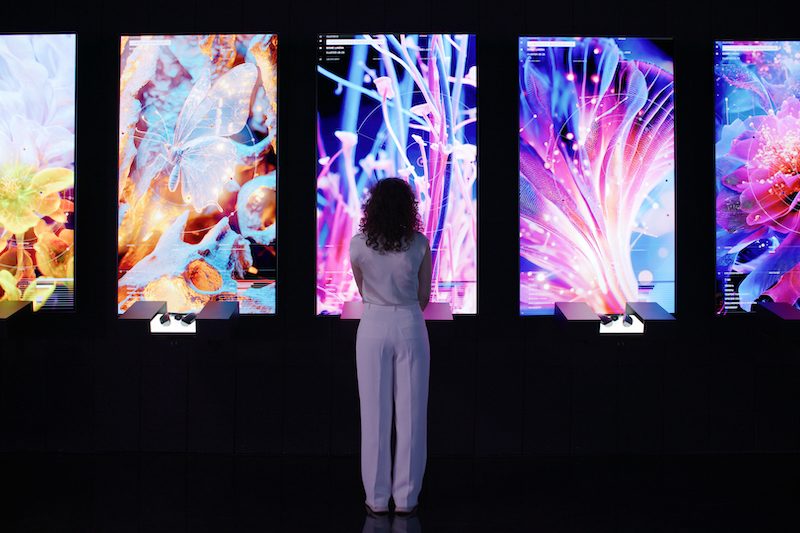
Unconstrained by the typical pressures of a commercial fragrance launch, L’Oréal Luxe’s exclusive partnership with artificial intelligence (AI) art museum Dataland is pushing the French beauty giant’s creative boundaries even further in 2026.
The French beauty giant’s luxury division was recently named as Olfactory Partner for Dataland, an omni-sensory museum of AI arts and digital ecosystem in Los Angeles, US.
Its inaugural exhibition, ‘Machine Dreams: Rainforest’, will open for eight months on 20 June.
Have you launched an innovative product, brand or campaign in the past 12 months? Then you could be in with a chance of winning at this year's new and improved Pure Beauty Awards 2026. Click here for more information.
L’Oréal Luxe has created 12 scents for the space that have never been smelled by the public, which are described as “avant-garde olfactive imprints inspired by the rainforest itself”.
These are not available to purchase as a perfume and can only be experienced in person at the Dataland AI museum, alongside a selection of accompanying AI-generated visuals.
“The objective was to push the boundaries of the scent experience, to create a living scent experience,” Veronique Ferval, International Director of Fragrance Design at L'Oréal, told Cosmetics Business.
The rainforest-inspired scents include Petrichor Memoria (Scent of Rain), which captures the scent of earth after the rain.
Mycelia Whisper (Scent of Fungi), meanwhile, uses an exclusive accord evoking the soft flesh of mushrooms and the breathing of soil.
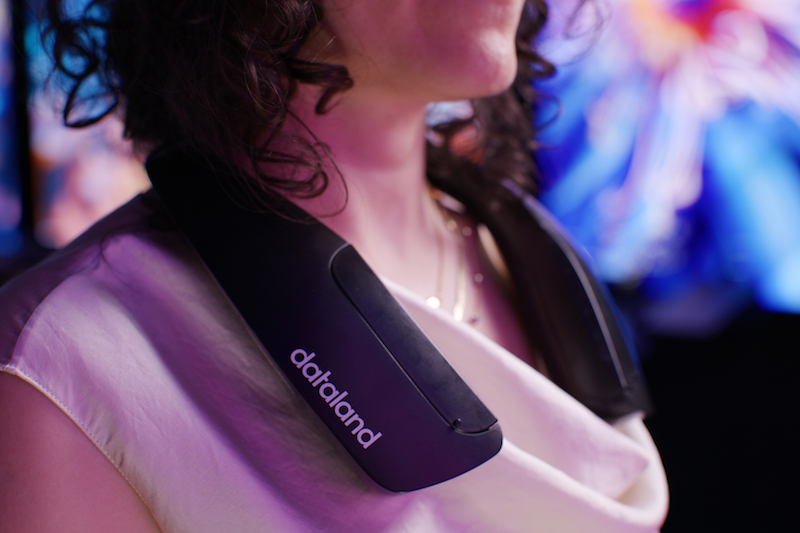
Smart diffuser worn around the neck
The pairing of more natural-derived scents and molecules from L'Oréal’s latest perfumery palette ingredients is a new venture for the French beauty giant.
Patricia Soyer, who heads L'Oréal's Scent Science department, explained: “The merging of the latest molecules with the latest innovation of extraction makes something quite extraordinary and unique as an experience, because it is the first time that we really merge both.”
To create the 12 olfactive imprints, L’Oréal Luxe deployed two extraction methods.
The first is its Headspace Technology, which acts as an olfactory vacuum, used to capture the aromatic molecules surrounding a living object — flower, wood, soil or even an environment like a waterfall — in its natural habitat.
Osmobloom, meanwhile, goes further by utilising a gentle and slow eco-extraction method that relies on air-capture, without using any heat, water or solvent in the process, preserving the full integrity of the raw material plant.
The extraction systems behind the fragrance creation is definitely impressive, but 'technology' itself that directly inspired L’Oréal Luxe’s most intriguing fragrance, Synthetic Essence (Scent of Data).
How L’Oréal Luxe capture the scent of the non-existent
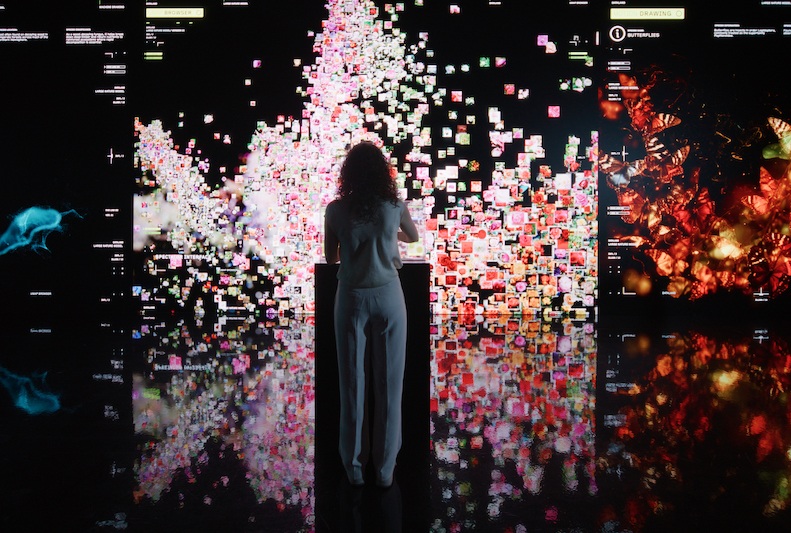
Synthetic Essence stands in paradox to the other nature and rainforest-inspired scents available at the AI museum.
It has been described as the world’s first scent of digital code, with L’Oréal Luxe taking on the challenge of giving a scent to something that has no smell.
The brand’s fragrance designers blended clean musks and aldehydes to replicate the “algorithmic pulsation of code on the dark and warm background”.
Its creation leaned more towards L’Oréal’s latest perfume palette molecules, through a process of molecular synthesis.
Soyer explained: “The challenge for us was to have something very vibrant and vertical, but to [also have] something very musky, with a bitter fluidity and harmony.”
Ferval added: “These aldehydes are sparkling, and more about texture, putting the latest molecule from the synthetic atoms at a dosage that you would never have in a classical perfume.
“I would say the dosage of this molecule in this accord makes all the difference in terms of your feeling and your emotion.
We want to create trends, we do not want to follow trends
“When you smell Scent of Data, you are transported to this [digital] world.”
This is all supported by the method in which visitors to Dataland can experience the new scents, which are fitted with a specially designed wearable scent device – a smart diffuser worn around the neck.
The 12 scents are then released in synchrony with the AI artworks shown on the walls.
Ferval and Soyer said that the creative freedom offered by developing the Dataland scents was liberating, compared with normal perfume creation.
Ferval added: “The only constraints are that they have to be safe.
“You do not have to fine-tune the perfume to please a huge amount of consumers, you [can instead] to deliver a strong emotional impact.
“So, what is more important here is the message, the boldness of the impact and the resonance.”
Why mixing experience with fragrance is the future of luxury perfumes
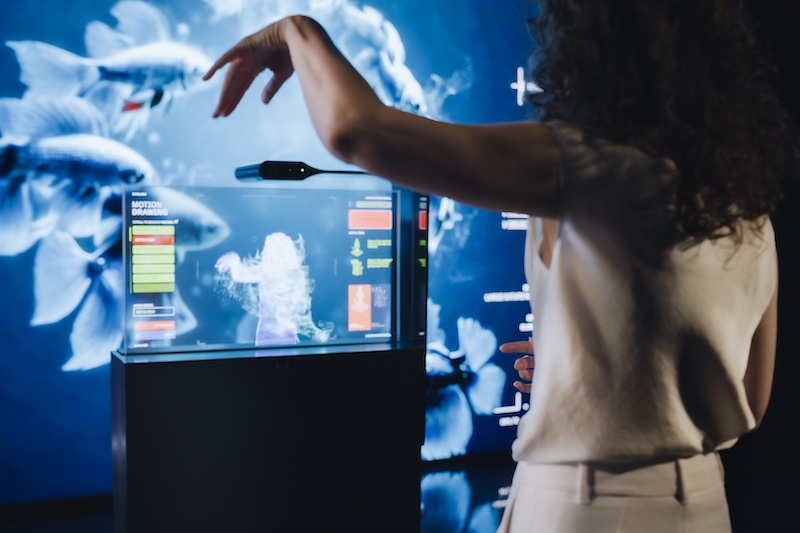
Immersive scent experiences are becoming a larger part of the luxury fragrance industry, and L'Oréal Luxe is adapting itself to this future.
“We have a very strong role in education of the consumer, and we also want to support any creative endeavour and art, so I think our role is expanding,” said Ferval.
“I think the world of scent is also expanding, as scent is everywhere, in every category, every region.
“As this is happening, we need to be more innovative and pioneering.
“We want to create trends, we do not want to follow trends, so we put ourselves under pressure to always be at the forefront and always at the edge.
“That is why this collaboration between the commercial world and the artistic world is key for us to bring that to consumers and to challenge ourselves also.”
Ferval also revealed that a similar project is also underway in Europe, and concluded: “This is not the end for us, it is just the beginning.”
Related content:
- Slow perfumery is the artisanal fragrance movement gaining traction
- Cosmetics Business reveals the top 5 fragrance trends of 2026 in new report
- Alcohol-free perfume is meeting Gen Z demand for skin-friendly scents
- Vanilla girl or granny chic: How fragrance became a lifestyle aesthetic
- Scent stacking: How minis and discovery sets are driving fragrance layering
- The future of fragrance personalisation, from product development to retail


