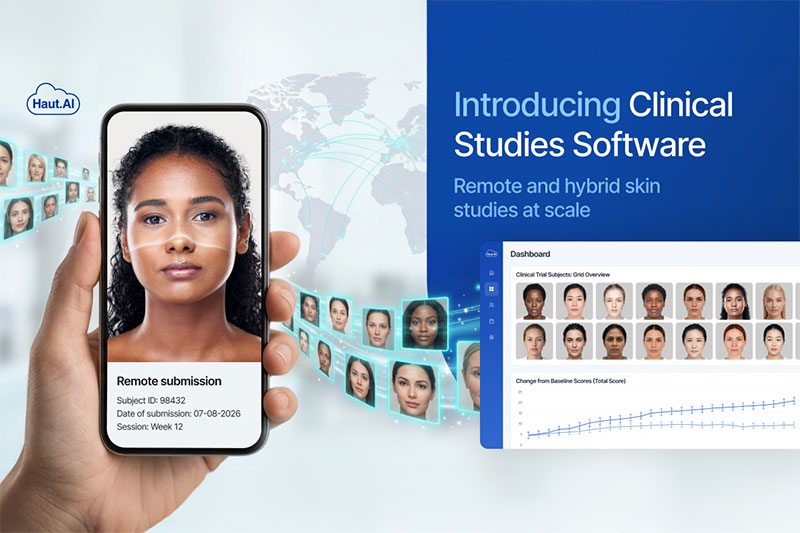
The platform moves a study from setup to first participant in two or three days, against a typical 8 to 16 weeks, a reduction of more than 90%. It is built for cohorts of hundreds or thousands, where a conventional efficacy study enrols 30 to 35 participants.
Clinical skin assessment has otherwise changed little in decades. It still depends on controlled testing environments, costly instrumentation, limited participant pools and manual grading by trained experts. Those methods remain the industry standard, but they cap study scale, raise costs, restrict geographic reach and produce results that vary between graders, making findings harder to reproduce.
Grader variability is the core R&D problem
The same skin can receive different scores from different experts, or from the same expert on different days. That variation adds random noise to a dataset and can obscure a real product effect.
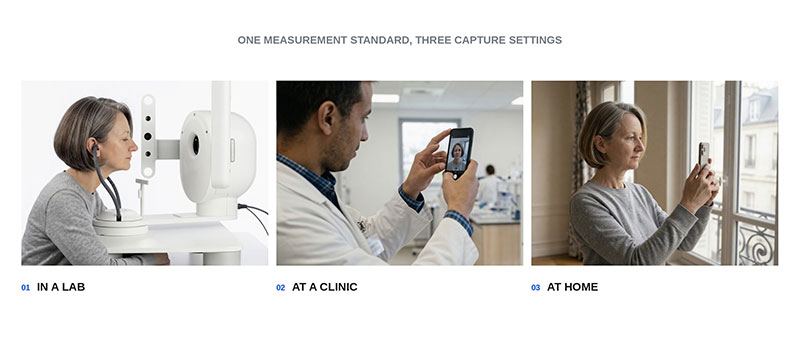
An AI model applies one standard to every image, in every location, at every timepoint. Measurements are consistent by construction, so studies can run across multiple sites and regions without sending trained graders to each one, with results comparable across locations, timepoints and capture settings.
That consistency is what makes larger cohorts practical, with at-home images delivering grading quality comparable to technician-captured photographs.
“Clinical research in beauty and skincare has reached an inflection point. The industry has incredible expertise in clinical science, but the tools used to collect and analyse data have remained largely unchanged for years. Our goal is not to replace clinical studies. It's to enhance them by making skin measurable at scale. R&D teams that can measure continuously across larger populations don't just do better science; they make faster decisions,” said Anastasia Georgievskaya, CEO & Co-Founder of Haut.AI and a scientist with a Master's degree in bioengineering and biophysics.
Validation: ICC 0.97–0.98 repeatability across five facial endpoints
The Clinical Studies Software is built on clinically validated AI models developed in collaboration with dermatologists. Haut.AI's skin measurement technology was evaluated against a consensus panel of expert graders in a study conducted at Institut d'Expertise Clinique (I.E.C.).Validation demonstrated ICC 0.97 to 0.98 repeatability across five facial skin endpoints, a level of consistency considered excellent by clinical standards. For structural ageing signs and pigmentation, the AI's grades correlate strongly with the dermatology expert consensus panel, and that agreement holds whether the image is captured on professional imaging equipment or by the participant on their own phone at home.
“Visible skin ageing has always been harder to quantify with the same rigour we apply to molecular ageing markers. Haut.AI's Clinical Studies Software gave us standardised, image-derived measures of facial ageing traits that we could pair directly with our DNA methylation data. That combination let us treat visible ageing as a quantitative trait alongside our biological measurements, instead of relying on subjective grading,” said Varun Dwaraka, PhD, FRSB, Director of Research and Principal Investigator at TruDiagnostic.
Five layers, from study design to claims substantiation
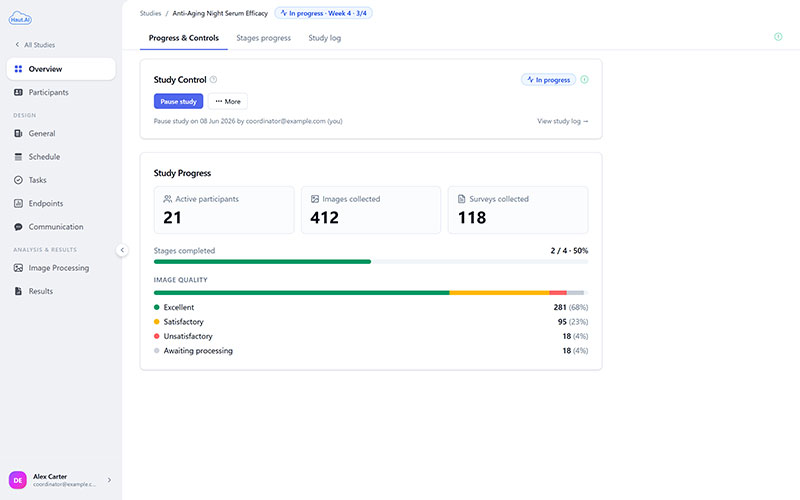
The platform digitises the full clinical workflow across five integrated layers:- Design. Researchers configure and control the study in-platform, defining participant lists, stage structure, session schedules, capture settings and optional surveys before collection begins
- Capture. Participants submit standardised images remotely or in-clinic using LIQA™, Haut.AI's Live Image Quality Assurance™ technology
- Measure. AI models quantify 48 validated biomarkers across face, body and hair, including pigmentation, wrinkles, texture, acne, redness, pore quality and additional dermatological endpoints
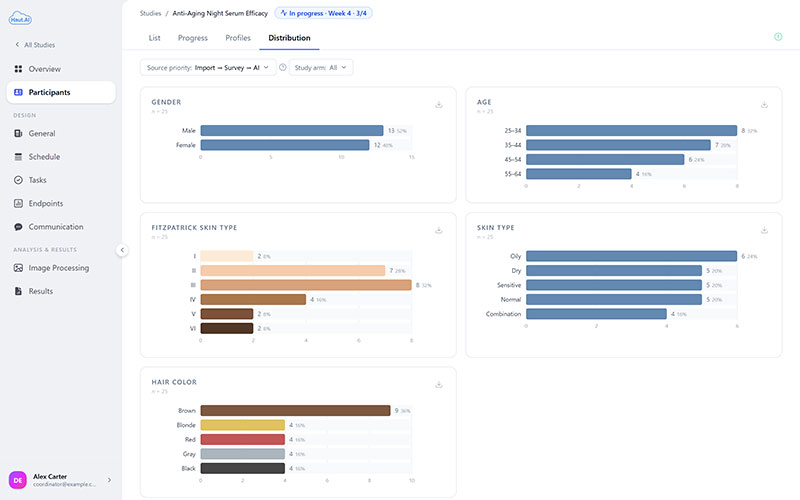
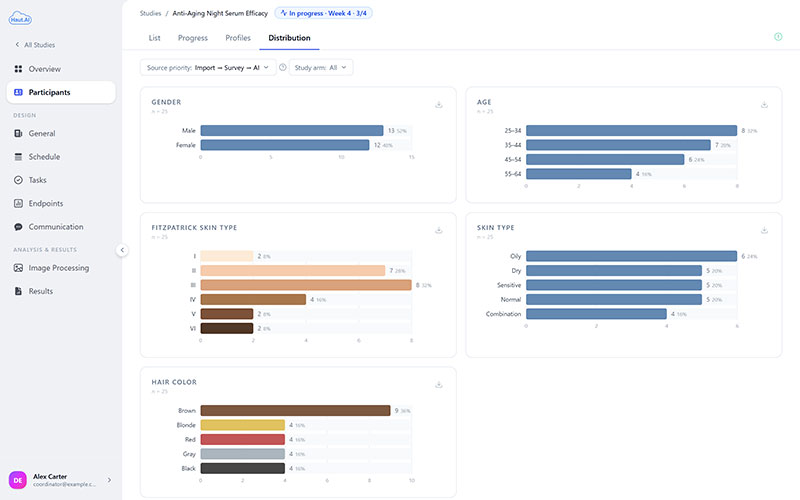
- Analyse. Cohort-level analytics, longitudinal tracking, phenotype segmentation and efficacy measurement through a centralised dashboard
- Substantiate. Results are converted into claims-ready reports and visual evidence packages supporting product development, efficacy validation and consumer communication
Where the cost comes out
In a traditional efficacy study, most of the cost sits in work repeated at every visit and every stage. The platform automates that work through AI measurement and remote self-submission, while ethics approval, compliance and recruitment remain with the research partner.Four cost centres are absorbed by the platform rather than scaling with the study: clinical grading, replaced by AI scoring at every visit; site monitoring, removed by remote self-submission; operational study management, including participant tracking, scheduling and completeness; and data management and reporting, generated automatically at cohort and individual level.
Because remote capture removes per-participant site visit costs, budget scales with recruitment rather than with headcount or visits, and teams can run larger cohorts for comparable total spend.
Already deployed at scale
The Clinical Studies Software builds on technology already in use by global beauty, skincare and ingredient companies, from Fortune 500 personal care manufacturers to active-ingredient houses and retail beauty brands. Deployments to date include a single consumer study screening more than 7,000 participants for a global personal care company, yearlong longitudinal skin research programmes run by Fortune 500 beauty manufacturers, formulation and ingredient evaluation for global active ingredient suppliers, and standardised remote and hybrid clinical workflows deployed across markets for a luxury beauty group.
Privacy is built into the platform's design. All facial imagery used in analysis is anonymised via Haut.AI's patented Skin Atlas technology, and personal and recruitment data remains with the research partner.
Find out more about Haut.AI's Clinical Studies Software here.