
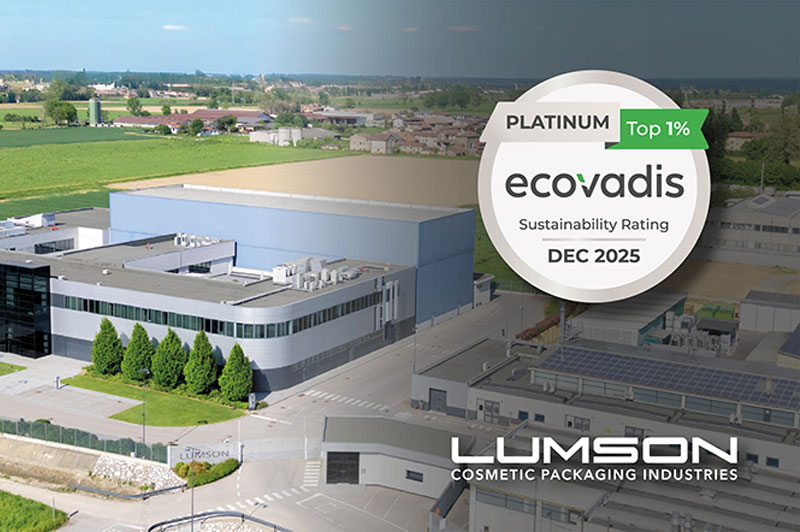
This is a significant goal that this Italian company has achieved. It’s the result of a strong commitment to best practices in sustainability and social responsibility, tied together with continuous investment in training, infrastructure and personnel aiming at a single objective: to improve its ESG performance.
“The Platinum Medal is the result of a journey that began back in 2020, marked by key milestones and the addition of further achievements in 2025: an ISO 27001 certification (the International Standard for an Information Security Management System – ISMS) and an ISO 37001 certification (the International Standard for Anti-Bribery Management Systems – ABMS).
The former enables organisations to protect sensitive data (confidentiality, integrity and availability of information) through a risk-based management approach and security controls, while the latter facilitates prevention, detection and response against corruption by promoting a culture of integrity and transparency, and by supporting compliance with anti-corruption laws.
These are voluntary standards that further consolidate Lumson’s commitment towards ethical and transparent business practices,” explains Nadia Valdemeri, Sustainability and ESG Manager.
This recognition means the Italian manufacturer and supplier of primary cosmetic packaging reaffirms its commitment to integrating and promoting sustainable practices. It positions itself among the most virtuous companies worldwide. The Platinum recognition certifies the maturity of the ESG processes integrated into the corporate governance and industrial strategies; processes that include: the design of packaging solutions aligned with recyclability and circular economy principles, the optimisation of production processes focussed on energy efficiency and waste reduction, the selection and engagement of suppliers based on environmental, ethical and social responsibility criteria, and also the continuous monitoring of performance through quantitative and qualitative indicators.
This new assessment, which has highlighted improvements everywhere, is based on documented evidence, measurable KPIs and formalized corporate policies, with particular focus on:
- environmental management systems and reduction of impact (energy, emissions, materials);
- health and safety, training and protection of human resources;
- business integrity, compliance and ethical practices;
- responsible supply chain management and ESG criteria applied to suppliers.
A recognition is not only formal, but it also represents a tool of transparency and reliability for cosmetic brands which are increasingly oriented toward manufacturing partners who have the tools to support real and measurable ESG objectives.
“This achievement, which places us in the top 1% of companies assessed around the world, is based on a structured analysis examining over 21 indicators across four key areas: Environment, Human and Labor Rights, Ethics, and Sustainable Procurement. It is clear evidence of our progress in sustainability and, more specifically, of our ongoing efforts to integrate ESG principles into our business, and also to make the supply chain more transparent. These efforts are accompanied by real action. To reduce our environmental impact, we have worked extensively over the years on both processes and concept design. The many solutions we have developed are a clear example of our promoting recovery and recirculation without losing sight of aesthetics, usability and customer experience. Moreover – and I would like to highlight this in particular – for us, the Platinum Medal is not an end point, but it’s rather a springboard towards new challenges and changes aimed at generating a positive impact for all stakeholders,” clarifies the President of Lumson, Matteo Moretti.
Among Lumson’s latest innovations that confirm the President’s statement is Free, the metal-free pump introduced last autumn, after five years of research, and which combines outstanding technical performance with environmental responsibility. In addition, numerous initiatives undertaken over the years also share a common focus on energy saving and optimised resource management: from energy sourcing from renewable sources to waste reduction and the responsible management of production waste.