
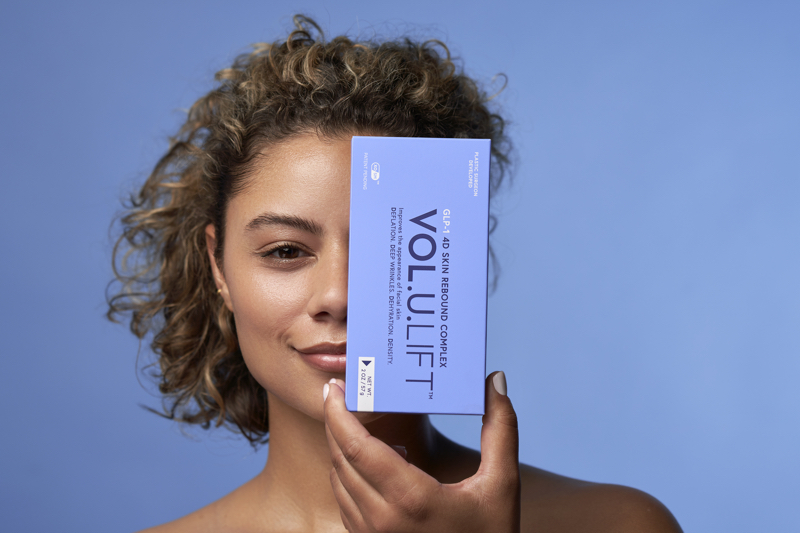
The landscape of weight loss has been jolted by the meteoric rise of GLP-1s.
With one in four people globally projected to live with obesity by 20351, GLP-1 drugs like semaglutide (Ozempic and Wegovy) and tirzepatide (Mounjaro and Zepbound) have emerged as essential tools in public health.
Originally developed to treat type 2 diabetes, they have become the go-to prescription for weight management thanks to their rapid effects, and nearly one in five American adults (18%)2 have taken them at some point, with a further 35% expressing interest3.
And a new poll by YouGov, commissioned by the National Pharmacy Association, projects that more than twice the number of UK adults will use weight loss injections in 2026, compared with the 1.5 million who used them monthly in 2025.
If your work involves novel actives, formulation science or technical problem-solving in beauty, the Cosmetics Business Innovation Awards offer a platform designed to highlight and clearly articulate the science behind breakthrough thinking. Entries open now!
However, these weight-loss medications are not only changing waistlines, they are altering lifestyles, spending habits, consumption patterns – and facial appearance.
With rapid fat loss comes a visible side effect that has gripped the beauty industry: ‘Ozempic face’.
While a slimmer face is often welcomed, the other facial outcomes – a hollowed look, sagging dull skin, and more prominent wrinkles – are not.
As the use of these medications surges – sales of GLP-1 drugs are expected to at least double by 20304 – a new category of skin care is emerging to address the specific physiological changes that occur during such drastic metabolic shifts.
The physiology of ozempic face
The primary culprit of Ozempic face is lipoatrophy, the loss of subcutaneous fat that normally provides scaffolding for the skin.
Without this underlying support, the face can appear gaunt, with sunken temples and hollowed cheeks.
The Ozempic face phenomenon is more than a fleeting trend; it is a physiological reality for millions of patients worldwide
Lipoatrophy naturally occurs with ageing but it happens gradually.
Under GLP-1 medications, the phenomenon is greatly accelerated leaving no time for the skin to adapt and retract.
It leads to looser and sagging skin, specifically around the jawline and neck, often referred to as jowls.
But Ozempic face is not only induced by fat loss.
GLP-1 drugs curb appetite and a lack of proper nutrition in patients can lead to muscle and collagen loss, resulting in thinner skin with more pronounced wrinkles.
These medications also create a ‘moisture deficit’ by simultaneously blunting the brain’s thirst signals and inducing nausea and diarrhoea, the two most common side effects.
This is why many physicians now prescribe ‘scheduled hydration’ (drinking water at set times regardless of thirst) as a mandatory part of GLP-1 therapy.
A woman looks at her face in the mirror
The suppression of fluid intake combined with fluid loss forces the body to prioritise internal organs, leaving the skin conspicuously dehydrated and parched.
Biologically, early reviews suggest that GLP-1 receptor agonists may cause a temporary downregulation of fibroblast activity, leading to reduced collagen synthesis5, contributing to thinner or lower-quality skin.
A market shift
The beauty industry has been quick to respond with dedicated solutions.
Two plastic surgeons paved the way by launching skin care products last April made for and clinically tested on GLP-1 patients.
VOL.U.LIFT, developed by Dr. Marc Ronert, co-owner of Image Skincare, is formulated to tackle what he calls the four D’s of GLP-1 skin: deflation, density loss, deep wrinkles, and dehydration.
Dr. Julius Few simultaneously released Dr. Few DermaReverse and a double-blind, peer-reviewed study6 published in the Aesthetic Surgery Journal.
Prompted by his experiences performing facelifts on GLP-1 users, he spent two years creating the skin care treatment.
SkinCeuticals followed in August with the A.G.E. Interrupter Ultra Serum.
Although not originally designed for GLP-1 patients, it is positioned as suitable for drug-induced laxity and volume loss, based on testing on GLP-1 users.
Beauty brands are expected to drop a flurry of GLP-1 support products in 2026.
Many others will adjust their communication about existing products to explain how they can benefit GLP-1 patients.
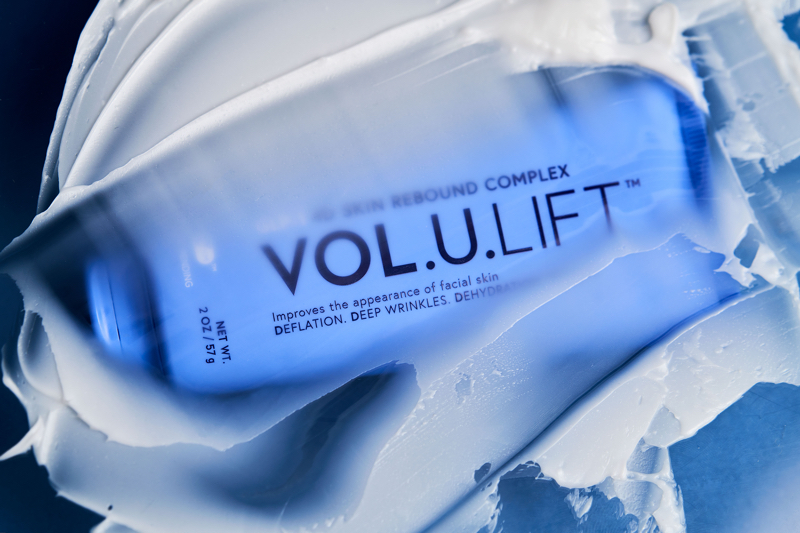
A tube of VOL.U.LIFT
Mitigating adverse effects
To the uninitiated, it is difficult to discern whether these targeted launches provide genuine innovation, or an opportunistic pivot mid-development to exploit a lucrative new segment.
To effectively address Ozempic face, a comprehensive approach centred around three key areas is essential: restoring volume by modulating fat cells, hydrating the skin, and reinforcing its architecture.
1. Restoring volume: modulating adipogenesis
Since fat loss is the primary cause of Ozempic face, one obvious strategy is to stimulate adipogenesis – the process of developing new fat cells (adipocytes) from stem cells.
Several cosmetic ingredients mimic a ‘lipofiller’ effect by encouraging fat storage in facial cells.
For example, Volpura EPO from Biocogent is an oil-soluble purple coneflower extract (Echinacea purpurea) rich in alkylamides that stimulate PPAR-y, a master regulator of adipogenesis.
Studies have shown that Volpura EPO activates the differentiation of pre- adipocytes into mature adipocytes and increases their lipid content.
This results in a noticeable plumping effect and reduced wrinkles after just 12 weeks.
Adeplump by Ichimaru Pharcos is an active ingredient derived from Arnica montana flowers that similarly affects pre-adipocytes and adipocytes size.
In a four-week in vivo study, 3D skin analysis showed a perceivable improvement in facial volume.
2. Deep hydration & hydro-fillers
Replenishing volume in GLP-1 patients is the primary goal of most aesthetic practitioners.
Hyaluronic acid (HA) fillers, such as Juvéderm and Restylane, are the most popular solution for immediate ‘spot treatment’ of hollow cheeks, temples, and deep nasolabial folds. ‘Ozempic skin’ is typically dry.
Formulators can also resort to advanced ‘hydro-fillers’, used topically, to infuse moisture into every skin layer and improve facial volume.
For example, Se(HA)+ from LipoTrue is a full-spectrum HA naturally produced by a microorganism that thrives in extreme conditions.
Biotech innovations are leading the way here and the latest buzzing ingredients are promising
It moisturises deeply and reduces nasolabial wrinkle depth in just 30 minutes.
In addition, it enhances epidermal regeneration and barrier function in the upper skin layers, while boosting endogenous HA synthesis and extracellular matrix renewal in deeper layers.
At identical tested concentrations, Se(HA)+ demonstrated superior efficacy on cellular renewal compared to HA benchmarks.
Derived from giant duckweed, Silab’s Apioskin is a natural plumping ingredient enriched in apiogalacturonan, a pectin with a water-retention capacity 2.3 times greater than hyaluronic acid.
This highly hygroscopic active absorbs and retains water from the skin’s surface to the upper dermis, providing both immediate and long-lasting hydration.
Clinical 3D volumetry confirmed its ability to visibly redefine facial contours and smooth lines within 21 days.
3. Reinforcing structure: ecm rejuvenation
The final pillar addresses the loose, sagging skin by reinforcing the Extracellular Matrix (ECM) and the Dermal-Epidermal Junction (DEJ).
Biotech innovations are leading the way here and the latest buzzing ingredients are promising.
By fusing Epidermal Growth Factor (EGF) to camelina oleosomes, Peauvita by Core Biogenesis offers a stable and irritation-free alternative to retinol, the gold standard for anti-ageing and skin renewal.
Compared to standalone EGF, stability is increased tenfold, allowing for deeper delivery.
Clinical studies suggest Peauvita outperforms retinol in wrinkle reduction while matching its ability to improve firmness and elasticity in just 14 days.
A woman looks in the mirror touching her skin
Meanwhile, ALGAKTIV Exometics G is a vegan biomimetic exosome engineered from microalgae that replicates the functionality of human fibroblast- derived exosomes. Exometics G activates epidermal regeneration, improves elasticity, and strengthens the skin barrier.
Clinical studies demonstrated that the active can visibly revitalise and make skin appear younger by an equivalent of 2.2 years in as little as 14 days.
Capitalising on the massive surge in consumer interest in PDRN (polydeoxyribonucleotide creams, which saw a 1,000% increase over the past year, according to Spate’s 2025 Skincare Trends: Signals, Shifts & Standouts Report, vegan PDRN ingredients are gaining traction.
Lacto-PDRN from NFC Corporation, extracted from Lactobacillus rhamnosus, a well-studied probiotic, stimulates the secretion of growth factors VEGF and EGF/IGF.
These factors are crucial for forming new blood vessels and skin renewal.
Clinical results reveal significant improvements in skin elasticity, firmness, density, wrinkle reduction, and overall radiance.
The Ozempic face phenomenon is more than a fleeting trend; it is a physiological reality for millions of patients worldwide.
By leveraging science-backed ingredients that restore volume, deeply hydrate, and rebuild the skin’s architecture, the beauty industry can provide valuable allies on the weight loss journey – ensuring that patients will feel as good about their skin as they do about their health.
References
-
World Obesity Atlas 2024
-
KFF Health Tracking Poll (November 2024/2025 Update)
-
PwC’s GLP-1 Trends & Impact Survey
-
TD Securities: GLP-1 Market – The Pipeline Expands
-
Springer Medicine GLP1_IRA and Possible Skin Aging
- A Single-Centre, Blinded, Placebo-Controlled Study Evaluating Cosmetic Efficacy and Safety of a Novel Topical GLPSCLT in Glucagon-Like Peptide-1 Analog-Treated Patients, Alec Semersky BA et al, Aesthetic Surgery Journal Open Forum, Volume 7, 2025
Featured companies


- Companies:
- Algaktiv


