
The private label cosmetics market continues to face challenges, and a number of trends are emerging that manufacturers and retailers hope to exploit to build their market share. Among them are celebrity tie-ins such as Rosie for Autograph at Marks & Spencer and Eva Mendes at CVS; increasing focus on natural ingredients and recyclable packaging; high-tech ingredients at modest price points; and upgraded packaging and presentation.
Fashion retailers continue to roll out cosmetics ranges to provide an alternative offering to garments, principally focusing on make-up rather than skin care, partly because the formulations are cheaper. Within make-up, most fashion retailers offer own brand colour cosmetics for lips, eyes and sometimes cheeks, but the more expensive-to-formulate concealers and foundations tend to remain off the menu.
“A lot of beauty and personal care products are everyday items that can be purchased easily from many types of retailer both in- and out-of-town, as well as online and through direct sellers, so the market is very fragmented,” says Susanna Capecchi at market researcher Mintel. “Few of the major retailers in beauty and personal care are actually specialist operators – Debenhams and the grocers vie with Superdrug to offer competition to Boots.”
Of the top 25 retailers in Mintel’s 2016 Beauty Retailing survey, eight are grocery retailers, four are department stores and just five are beauty and personal care specialists (counting A.S. Watson, which owns Superdrug and Marionnaud, as one entity). In order of magnitude, the chief players are Boots, A.S. Watson, The Body Shop, Sally and Bodycare.
“However, of course, many of these retailers are not in direct competition,” points out Capecchi. “Supermarkets’ beauty and personal care sales will be weighted towards mid-market toiletries, while department stores focus on premium beauty.”
Swallowfield is one of Britain’s largest private label cosmetics manufacturers and operating in a competitive market, says its Commercial & International Business Development Director, Jamie Bachelor. Innovation is key to thriving and surviving.
“The market continues to be highly competitive,” he says, “but there are still good opportunities for suppliers like ourselves who are willing to innovate and differentiate their offering.”
In 2016, the company worked with a number of fashion retailers to build their own cosmetic portfolios.
“Retailers see this as an important avenue to increase incremental spend and complement their clothing lines,” says Bachelor. “Private label is of equal importance to Swallowfield alongside brands.”
Bachelor says he feels it is part of the business of a private label manufacturer to monitor the factors that are influencing products. “From fashion to fresh ingredients, products to packaging,” he says, “we track what’s trending in these areas so we can help our clients to stay informed.”
Brexit Implications
One of the issues focusing minds at present is, of course, Brexit. Businesses generally prefer certainty to uncertainty, and since no-one knows exactly what form Brexit will actually take, uncertainty still prevails. Before the referendum, due to their international links, many cosmetics companies were publicly pro-Remain; perfumer Roja Dove, for instance, warned that fragrance raw materials cost ‘more than gold bullion’ and would be adversely affected. Following the dramatic fall in sterling since the referendum vote, raw materials costs have risen, which has presented difficulties for UK-based manufacturers. But on the other hand, the lower pound makes exports more competitive.
In this regard, having an international operation can insulate a business from the worst effects of economic fallout and here Swallowfield is illustrative of a company that is well placed. “As a business we are fortunate to have operations in the UK, Central Europe and China,” says Bachelor. “This has allowed us to react to a very changeable cost environment. The recent depreciation of the pound following Brexit has meant our UK operation has and will continue to offer competitive opportunities.”
Speed Is Essential
Retailers are now keen to build their private label cosmetics businesses, says Brian Sharoff, President of the Private Label Manufacturers Association (PLMA), but he believes speed is of the essence.
“The chief issue is how quickly retailers can move to expand their private label cosmetics businesses,” he says. “The race is on both in Europe and in the US – retailers see an opportunity and want to build the category. This is especially true in the US market, where drugstore retailing is down to two major players and there is huge distribution potential.”
This trend is evolutionary, says Sharoff, and could clearly be seen building for several years ahead of 2016. But last year that trend began to accelerate and the results could be seen all over Europe and the US.
Among the retailers that released their own brands last year were the German discount supermarket chain Netto (not to be confused with the Danish supermarket chain of the same name), which in May launched into cosmetics with the Shisara brand of colour cosmetics. The range comprises lipsticks, lip glosses, nail polishes, eyeliners, mascaras and eyeshadow palettes and duos, and the products were rolled out in 1,500 of the company’s drugstores (it has 4,500 stores altogether, mainly food-based).
“With the addition of decorative cosmetics, Netto Marken-Discount is expanding its comprehensive range of drugstores, thus offering fashion-conscious customers a high quality range of make-up products for their daily needs,” says Christina Stylianou, the company’s Head of Corporate Communication.
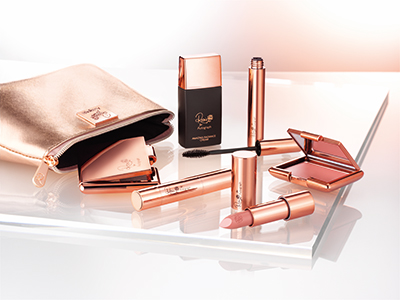
In the UK, at the beginning of 2016, retailer M&S launched a make-up range under its Rosie for Autograph label. The original label was a lingerie range helmed by British model Rosie Huntington-Whiteley, and has since been extended to nightwear and sportswear, with M&S claiming it as its best selling brand ever.
The new cosmetics range, tagged by M&S as “easy-to-use modern make-up classics with supermodel-approved beauty credentials”, features 60 items, with a price point considerably higher than the original Autograph range (a lipstick at £14 instead of £10 for Autograph, and a blusher at £14 instead of £7 for Autograph). The packaging is also higherend with a metallic rose gold finish, which instantly made the black plastic of the original look somewhat old-fashioned.
In Spain, Europe’s largest department store chain El Corte Inglés launched a facial beauty care range under its All Intense make-up and fragrance brand. Produced by Swiss company Mibelle, this plays to both the naturals market with ingredients such as water lily and almond blossom, but also to the high-tech sector with its use of stem cells of Swiss apple Uttwiler Spätlauber and Dermcom technology, which claims to facilitate communication between skin cells and increase the production of collagen and elastin. Packaging is pared down and purist, and the price point extremely moderate for Swiss cosmetics, starting at t2.80 for toner and rising to t13.95 for an anti-ageing serum. The range also includes an anti-ageing night cream for men.
In France, in September 2016, perfumery chain Marionnaud released its new travel range, Pick&Go, and previewed it in late summer with an unusual promotion: giving free treatments to passengers on board the country’s high-speed TGV train network. Customers were able to choose from a mini skin care treatment, a quick make-up session or a consultation with a beauty advisor, all performed while travelling.
Olivier Carrette, the company’s Marketing and Digital Director, said that it had “launched the iDTGV operation in order to offer an original experience to holidaymakers” – the company set up in the holiday section of the trains rather than in the separate business class.
Pick&Go consists of mini products, make-up and accessories, including cotton buds infused with make-up remover and the Mon Kit Fraicheur, a make-up bag – transparent to get through airport security – with a selection of products to freshen up and relax.
British grocers too were represented by major releases in 2016, including Sainsbury’s, which in October tagged its new Boutique Beauty Solutions as being “for all women and all occasions”. This was a seven-strong niche collection of looks, using the 2013 Boutique collection of make-up designed by make-up artists Jo Saville and Sophia Price. Boutique Beauty Solutions was effectively a lookbook that invited clients to choose from looks such as That Friday Feeling, using make-up to the value of £24, You Mean Business (£30) and Date Night Diva (£42). Notably, the advertising imagery featured women of a wide range of skin colours.
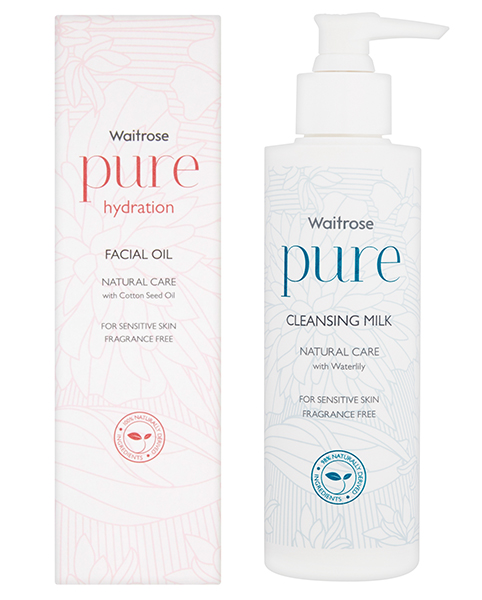
Later that year, Waitrose played into the naturals trend with the relaunch of its Pure range under the new names Pure Sensitive and Pure Hydration. The range, originally launched in 2014, was reformulated to be at least 98% natural, with ingredients including water lily, cotton milk and cotton seed oil. Items include a hot cloth cleanser (£5), an exfoliating powder (£3), a facial oil, a clay mask and hair care products tailored to dry or damaged hair.
The original Waitrose Pure line was a huge success after its initial launch and Waitrose claims that 10% of the facial skin care products sold in-store are now from the range.
For the relaunch, Waitrose played more heavily on the natural credentials of the products, with some now being 100% naturally-derived and all being suitable for vegans and vegetarians.
‘Free-from’ rather than ‘containing’ looks set to be a strong continuing trend in cosmetics, just as it is in food, as consumers search for products that they feel won’t be harmful. “Health and wellness, including ecological and natural, are important factors in all categories: food, beverages, health, beauty, etc,” says the PLMA’s Sharoff, “and retailers are playing to this trend by the selection of premium ingredients in cosmetics and beauty lines.”
Dutch food retailer Ahold, which merged to become the Ahold and Delhaize Group in July last year, also chose 2016 to launch its Etos beauty and health brand – well-known in The Netherlands – into the US. “Etos has 100 years of experience in personal care, offering real solutions to customers in health and beauty care,” says Maud van Gaal, External Communications Manager at the company.
“The own brand products stand for high quality and low prices. In the last two years we relaunched the Etos brand, with a makeover of the logo and the look and feel of the stores, and the own brand products got a makeover as well.
“In addition, Etos in the Netherlands launched new product lines, including a vitamin range, a new baby care range, a ‘botanical boost’ wellness line and many other products.”
Promoting Private Label
“Generally, in the private label business, the major retailers work closely with their suppliers from the beginning of the product development process,” says Sharoff.
“Some retailers look to their suppliers for promotional funds but since private label is usually sourced at the lowest possible cost, there is generally no money left over for promotional allowances. But this does not necessarily apply when category-breaking new products are created since both supplier and retailer have a vested interest in product success.”
Certainly, Ahold took a 360-degree approach to its US launch. “We used social media, in-store promotions, magazine ads, off-the-shelf displays and circular ads to announce and promote Etos,” says Ahold’s van Gaal.
Tie-ins And Upscaling
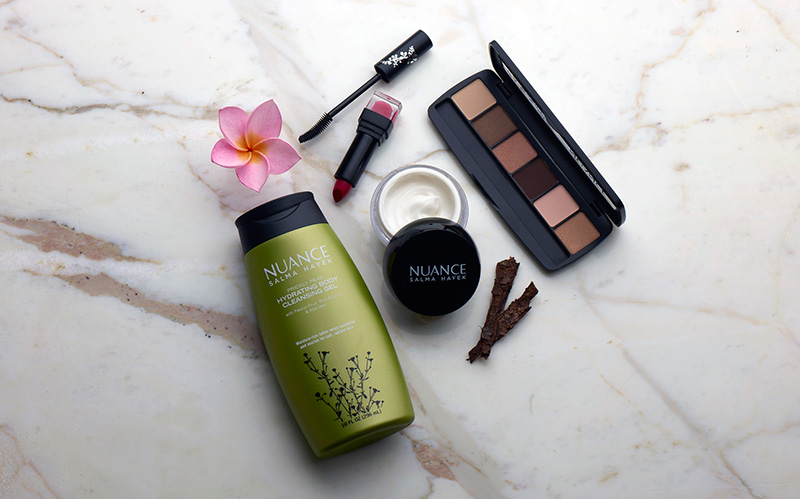
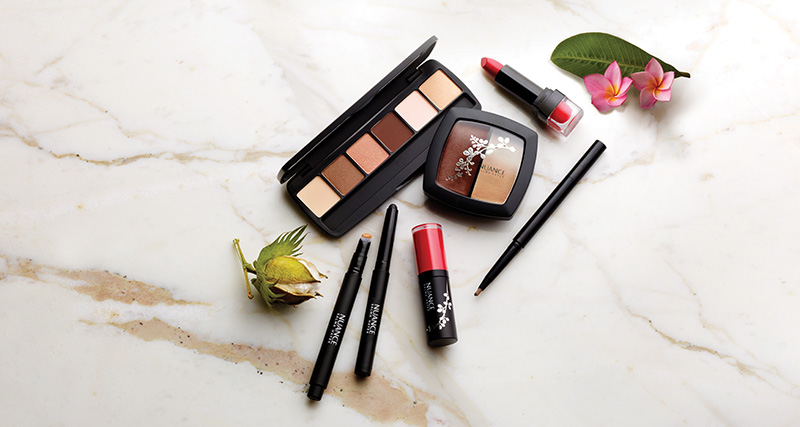
Tie-ins with famous beauties was another strong trend in 2016, and included not only the Rosie for Autograph line, but also the make-up segment of CVS’ Nuance Salma Hayek line, which was relaunched at the start of 2016 with 37 new skus replacing older formulations, effectively turning the colour cosmetics into skin treatments with colour. Hayek added ingredients such as the traditional Mexican herb tepezcohuite and argan oil, with the aim of boosting the colour range, which had lagged behind the skin care range of the same name.
“The focus [in the market] continues to be higher-end, since this has been identified as what the target market wants,” confirms Sharoff.


