

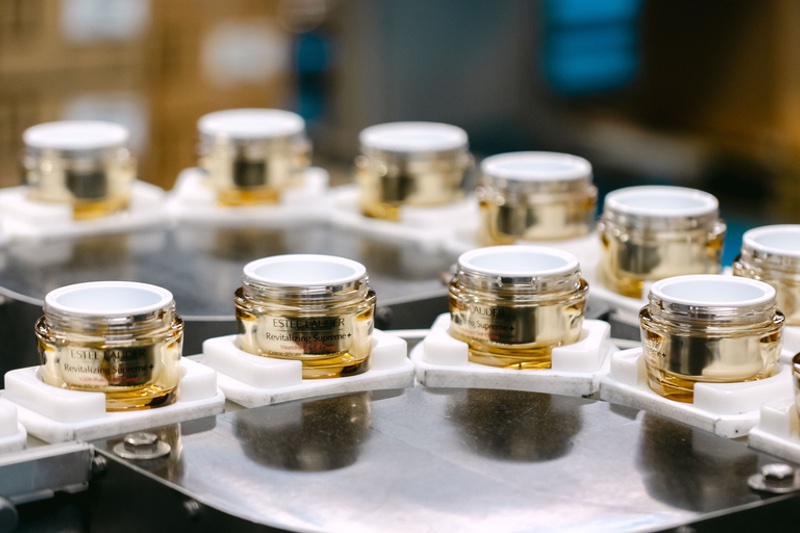
Estée Lauder Companies (ELC) has lifted the lid on how it is evolving its beauty supply chain to transform it into a “strategic engine of growth”, hoping to meet market demand faster and be more agile in a world that is growing ever more volatile.
The beauty giant says growth in its value chain will come from further combining craftsmanship and brand heritage, with advanced automation, artificial intelligence (AI)-supported quality control and rapid prototyping technologies, describing it as an “essential ongoing piece of work”.
Driving greater resilience and agility across the supply chain is no easy feat, and this is being undertaken alongside the company’s ongoing ‘Beauty Reimagined’ turnaround strategy, which aims to improve profitability, boost lagging sales and streamline operations.
Roberto Canevari, Executive VP and Chief Value Chain Officer at ELC, says evolving the value chain – i.e. being faster on innovation, speed to market and delivering a higher percentage of regionalised products – is critical to enabling growth for years to come.
“We are doing it for one simple reason – to meet consumer demand and to enable growth, wherever and whenever it comes from,” says Canevari.
Have you launched an innovative product, brand or campaign in the past 12 months? Then you could be in with a chance of winning at this year's new and improved Pure Beauty Awards 2026. Click here for more information.
“We live in a competitive environment, so the more we compete better in those challenges [volatility and complexity in the supply chain], the more we will be able to win under those circumstances.
“We need to be faster than our competitors, or at least as fast as we can, [to] enable the growth of the company, but at the same time, we want to do it in a very efficient way.
“The value chain can play a key role in delivering the ‘Beauty Reimagined’ plan, and we are doing it with three things – customer and consumer centric value chain, dynamic value chain and value creation – along with a platform that underpins everything.”
ELC’s global manufacturing network includes nine integrated sites that produce


