

Beauty is proving time and time again that it is not afraid to be adventurous with its brand collaborations, and music is its next big play.
The industry became deeply infatuated with the Olympic games and global sports events in 2024, with sponsorships, ambassador appointments and product launches that still continue to this date.
Video games have been another unlikely, yet thriving, team-up, which has seen even the most prestigious luxury houses launch activations on gaming platforms such as Roblox.
Fast forward to 2025, and beauty is currently finding its collaboration home in Formula 1 and now music, which appears poised to become the industry’s next love affair.
Matches made in heaven
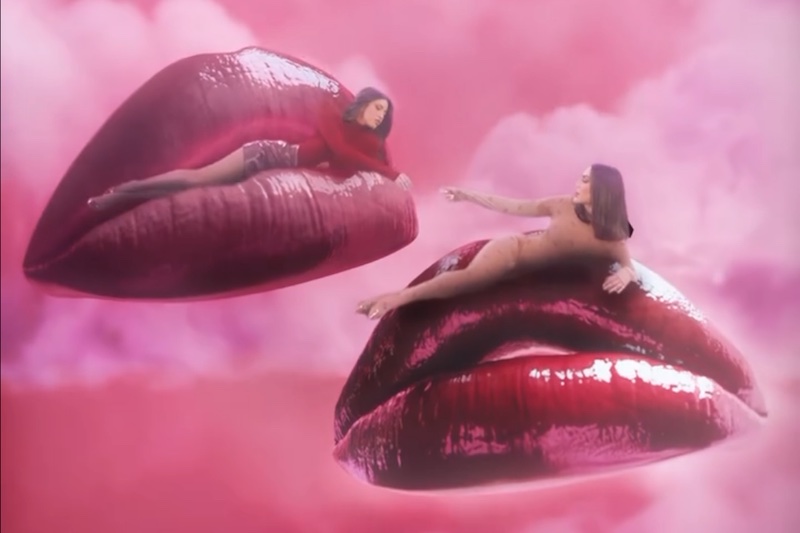
Among the businesses tapping into music in 2025 is Huda Kattan’s cosmetics brand Huda Beauty, which has released its second-ever music video this month to promote its lip stains.
The one minute-long video, starring Katan along with influencers Cindy Kimberly and Uche Natori, has been viewed more than 31,000 times.
Kattan’s first music video, ICY EYE$, was created to advertise the brand’s Icy Nude Palette in 2024.
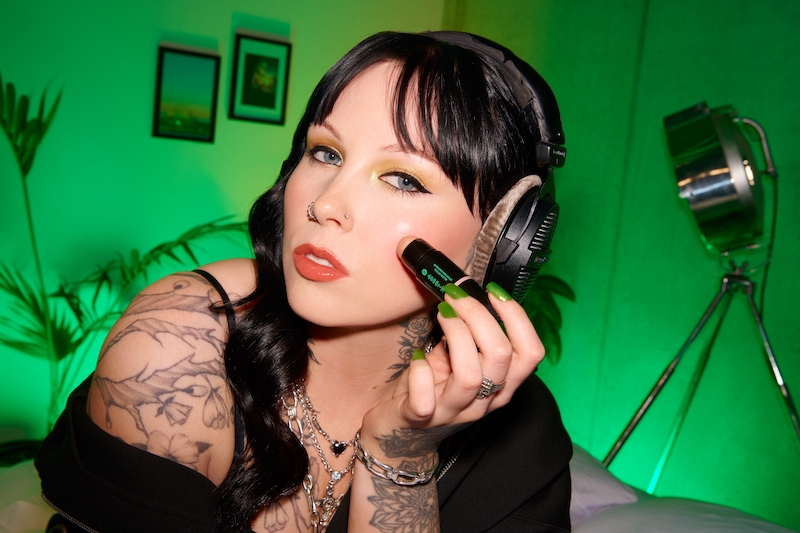
Meanwhile, UK beauty business Rimmel London has also launched a new music-inspired make-up range.
The Full Volume collection comprises four “festival-proof” Glow Sticks, available on TikTok Shop, and the addition of five chrome and pearl-infused shades to Rimmel's nail range.
The twist is that each product features a Spotify code on the packaging that can be scanned on the music app to take the user to several custom playlists created by Rimmel London.
The interactive packaging is a first for the Coty-owned brand and was a means of “taking the user beyond just the product”, Stefano Curti, Chief Brands Officer, Consumer Beauty at Coty, told Cosmetics Business in an interview at the time.
Curti added: “[We want users to] fully immerse themselves in the Rimmel world.
“Music helps shape who we are, so it felt natural to bring it into our product experience.”
Rimmel London is not the only brand looking to utilise the emotion-driven world of music to solidify a presence in the minds of consumers.
L’Oréal-owned skin care brand Kiehl’s claimed to be the first-ever beauty brand to sponsor a stage at the Governors Ball Music Festival in New York, US.
The festival, which took place between 6 June and 8 June at Flushing Meadows Corona Park in Queens, saw the brand host a consumer-first activation centred around SPF.
Heavily inspired by music, the pop-up space featured a cassette tape photo backdrop, a misting station, a facial jewel application station and free derma-reader skin scans.
“At Kiehl’s, we are always looking for meaningful, culturally relevant ways to show up in our consumers’ worlds – whether that is through music, art, wellness or beyond,” John Reed, Kiehl’s General Manager, told Cosmetics Business in May.
NYX Professional Makeup, meanwhile, has unveiled its 2025 Pride campaign which puts a spotlight on three rising star musicians – R&B singer Destin Conrad, alternative pop artist Zolita and Grammy-nominated singer Tiana Major9.
On the other end of the spectrum are musicians themselves who appear to be solidifying their links and partnerships within the beauty industry.
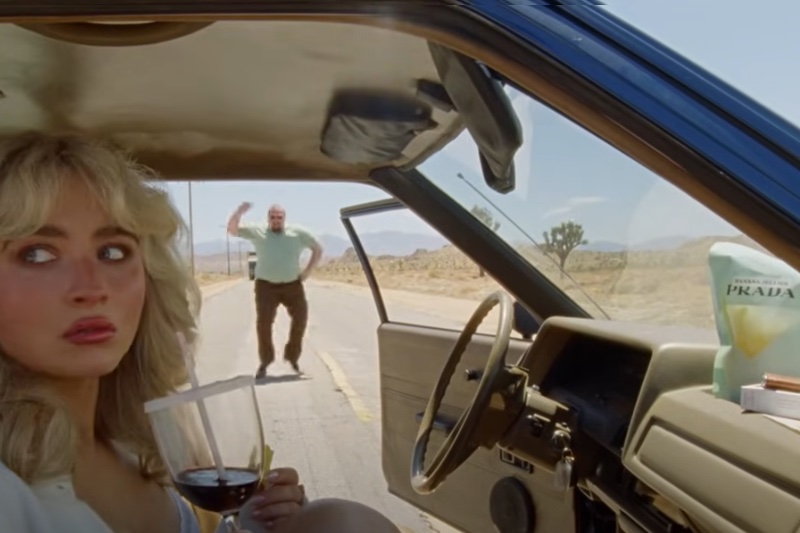
Sabrina Carpenter has hinted at a fresh Prada Beauty collaboration in the video for her new song ‘Manchild’.
The music video, which dropped on 6 June, sees the 26-year-old American singer-songwriter playfully hinting at a new project with the luxury Italian beauty brand.
Pop-star Addison Rae has also used a behind-the-scenes video looking at her debut album, Addison, to express her appreciation for Armani Beauty.
"Can't get enough of @Armani beauty cheek tint shines," an Instagram caption from Rae promoting the video read.
Looking back further, e.l.f. Beauty released its viral #EyesLipsFace track in 2019 which still has more than 1.2 billion views on TikTok to date.
“Commissioning a 15-second original song turned every user into a micro-media-buys later, the brand cut cost-per-acquisition by 56% and drove click costs 49% below benchmark, fuelling its 21-quarter growth streak,” says Rah Bhatt, Director Creative Strategy at music and sound consultancy MassiveMusic.
Singer Rihanna’s Fenty Beauty stunt during the 2023 Super Bowl also proved the influential power of tying music and and cosmetics together.
Why has music got a hold on beauty
Rimmel London's new collection links to Spotify
The signs only point to further music and beauty collaborations, but why is the industry attempting to secure a better footing in this space?
Science may provide the answer.
“The intersection of beauty and music is a natural evolution powered by the desire to create richer consumer experiences and tap into the consumer's nonconscious mind,” Dr. A.K. Pradeep, founder and CEO of generative AI company Sensori.ai, tells Cosmetics Business.
“With its profound emotional and mnemonic power, music has long been recognised for its ability to evoke emotions and memories, which are pivotal in establishing brand connections.”
Neuroscience research claims that music can activate multiple areas of the brain related to memory, emotion and reward.
Brands are potentially seeking to capitalise on this phenomenon by providing a “backdrop for enhancing the sensory and emotional impact of their beauty products”, Pradeep adds.
Rimmel London’s campaign exemplifies this best, taking users straight to a playlist curated by its staff to listen to while getting ready or applying make-up.
Brands that tune in early will set the rhythm for the category
Pradeep continues: “By integrating music into their marketing strategies, beauty brands like Rimmel London and Kiehl's can tap into the nonconscious mind, creating a more immersive and resonant brand experience.
“Music helps in crafting a multi-sensory brand narrative, aligning with the emotional memory structures that make brands more memorable and desirable.”
But it is also not just about setting the stage for a great night out, but a brand becoming more relatable in the eyes of consumers.
Finding commonality with another person who shares the same tastes in music as you is an exhilarating experience, which Louise Findlay-Wilson, Managing Director at Energy PR, says may be what brands are trying to replicate.
Findlay-Wilson says: “You only have to look at what makes people love a brand to understand why these collabs are taking place.
“The right music collaboration is a brilliant shorthand for showing that a brand ‘gets’ its audience.
“Then, if you throw in all the additional exposure the beauty brand gets in a very noisy marketplace, such collaborations quickly make real marketing and business sense.”
Lorna Hawtin, Chief Strategy Officer at Zeal, adds: “Music is increasingly shaping the style narrative, overtaking traditional platforms like the red carpet.
“Today’s artists act not only as performers but as visual tastemakers with significant cultural influence.
“For beauty brands, this goes beyond conventional collaborations.
“It represents an opportunity to connect more deeply with audiences by engaging in the spaces where identity and aesthetics are being continuously redefined in real time."
Expression enhanced
Sabrina Carpenter teased her new Prada collab
Although marketers are likely revelling in the new opportunities to sell products, beauty and music have always been connected in one key way: self-expression.
“Beauty and music are both deeply rooted in self-expression, making their crossover not only natural but also beauty’s latest marketing obsession,” says Georgina Bojarski, Director of Media at social agency Buddy Media.
This is all supported by the popularity of platforms such as Spotify, particularly with Gen Z, which accounts for a significant portion of the 678 million-strong userbase, according to podcast streaming site transistor.fm.
TikTok, meanwhile, started life as a lip-syncing app Musical.ly in 2014 before becoming the goliath it is today, and serves as another platform where music thrives among the youth.
“Consumers do not just listen to music, they build identity around it,” adds Bojarski.
“When beauty brands show up through artist collabs, festival stages or product teases in music videos (like Sabrina Carpenter), they are not just launching a product.
“They are creating a cultural moment people want to be part of. It is emotional. It is immersive. And yes, it is working.
“These partnerships are generating attention, building real brand love, and turning casual fans into long-term customers.”
But is beauty turning towards music a symptom of brands running out of creative outlets?
Bojarski argues that a standard product drop “just does not land the same way anymore”.
As long as music shapes identity and community, beauty will continue to play in that space
Music is now giving beauty brands new ways to tell stories to help them stay relevant in what has become a densely oversaturated market, and the trend is likely here to stay.
“Music gives beauty brands a rare full-funnel loop,” says Bhatt.
“Streams, saves and Shazams act as early-stage brand-lift metrics; playlist scans or festival redemptions quantify mid-funnel engagement; and sales spikes or valuation gains close the loop.
“As streaming platforms open their APIs and events provide deeper audience intel, expect launches increasingly choreographed to music moments and products designed to blur the line between what we hear and what we wear.
“The convergence is still gathering pace, brands that tune in early will set the rhythm for the category."
Bojarski concludes: “As long as music shapes identity and community, beauty will continue to play in that space.
“The smartest brands already are.”
While only time will truly tell if music will become the latest beauty mainstay, the signs are pointing to a smash hit performance over the coming years.
Here’s to the encore.
(Photo Credit: Huda Beauty Instagram)
Related content:
- Exclusive: Rimmel London taps Spotify for first-ever ‘interactive’ music packaging
- L’Oréal-owned Kiehl’s ‘first-ever’ beauty brand to sponsor a stage at Governors Ball
- NYX Professional Makeup celebrates queer artistry with ‘Pridemix’ pride 2025 campaign
- Sabrina Carpenter teases new Prada Beauty collaboration in ‘Manchild’ music video


