
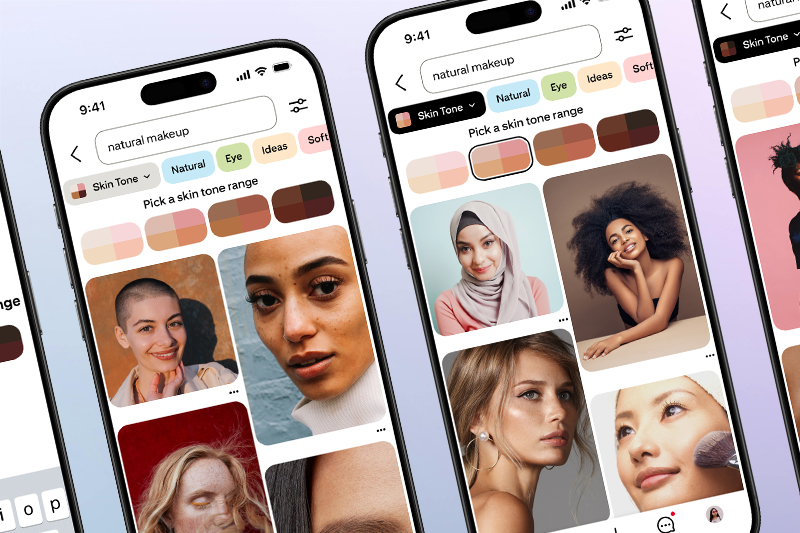
Beauty consumers have never had more choice, yet finding the right product can feel harder than ever.
Younger consumers are feeling this most acutely, with nearly half of Gen Z saying it is harder to make decisions today than it was last year, while a further 48% confessed they are buying more products they do not end up liking or using.
Faced with an endless stream of recommendations, launches and trends, many shoppers are not lacking options; they are lacking relevance, and this is the modern beauty discovery dilemma.
Traditional text-based search often struggles to solve this dilemma because beauty is rarely discovered in words alone.
People do not always begin to search with the precise name of a lipstick, nail shade or haircut.
More often, they start with a feeling, finish, look or an aesthetic they want to recreate.
In beauty, inspiration is visual, emotional and highly personal.
Have you launched an innovative product, brand or campaign in the past 12 months? Then you could be in with a chance of winning at this year's new and improved Pure Beauty Awards 2026. Click here for more information.
Visual search queries continue to increase and are the fastest-growing search feature on Pinterest’s platform.
This shift is especially pronounced among Gen Z consumers, who increasingly turn to visual platforms at the start of their journey, and make up more than half of Pinterest’s global user base.
For them, the process is not simply about finding a product quickly; it is about exploring identity, taste and self-expression.
When that experience feels too transactional or generic, decision fatigue soon follows.
For the beauty industry, this presents both a challenge and an opportunity.
As digital beauty sales soar into the billions globally, the route from inspiration to purchase has become a decisive moment.
Those that can make the experience feel intuitive, inspiring and personal will be far better placed to win attention and build lasting affinity.
A more intuitive path to purchase
Visual search is helping to unlock that opportunity by allowing consumers to begin with what catches their eye – a make-up look, hairstyle, nail design or even a packaging aesthetic.
From there, they can explore related ideas and products in a way that feels much closer to how inspiration happens in real life.
What makes this so powerful is the growing sophistication of


