
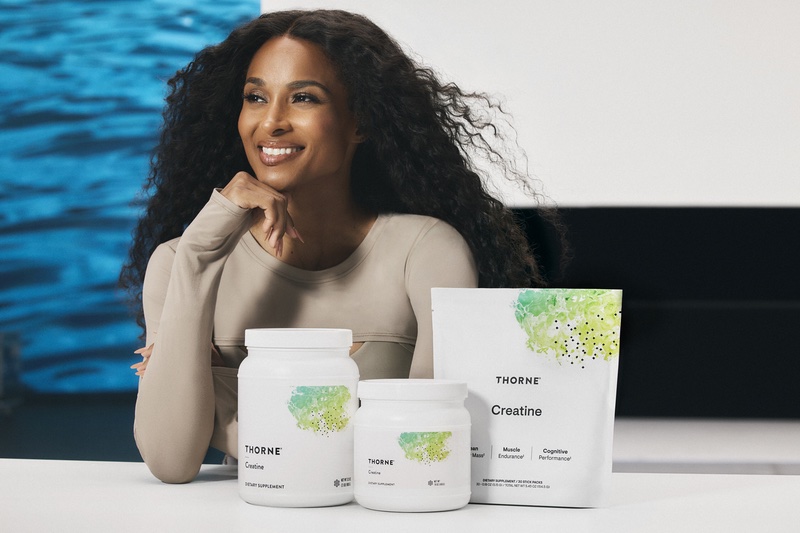
A 30-year-old muscle-building supplement once marketed to gym bros in parking lots has just had its biggest year ever – creatine.
Sales for it on ecommerce giant Amazon are up 90% this year. No new formula. No celebrity face. The growth is coming from women.
Searches for ‘creatine for women’ this year grew more in August alone than in the whole previous year, despite the usual summer dip. But why with women?
Despite decades of research on creatine, evidence for how it worked in women barely existed.
A 2021 review by Exercise Physiologist Abbie Smith-Ryan found women have 70% to 80% lower endogenous creatine stores than men and pulled the research through a female-lifespan lens*.
Suddenly, an old bodybuilding supplement mapped onto three critical pillars of female health: age-related muscle loss around menopause; brain function and brain fog; and the hormonal shifts of menstruation, pregnancy, postpartum and menopause.
The science existed. The product existed. What changed was the need becoming visible.
Tickets are now available for the 25th anniversary of the Pure Beauty Awards, taking place on 15 October 2026 at the Grosvenor House Hotel in London, UK. Join the beauty industry for an evening of recognition and celebration as this year’s winners are revealed. Click here to secure your place.
Following the money
The company now leading Amazon’s creatine category by revenue is Thorne (pictured above with singer Ciara), the clinical supplements business P&G agreed to acquire for US$3.8bn in August.
Creatine is a small example of a much bigger convergence between beauty, health and wellness already reshaping the industry.
In 2026 alone, close to $10bn has been announced across six major deals in ingestible supplements and functional nutrition, involving P&G, Unilever, Kirin, Bain, Nestlé and Danone.
But the major players are not all placing the same bet.
Creatine is a small example of a much bigger convergence between beauty, health and wellness already reshaping the industry
While P&G, Unilever and others are putting capital behind daily wellness rituals, L'Oréal is moving further upstream into biological ageing, diagnostics and biomarkers.
The logic is simple. What we see on the outside as visible ageing is partly a reflection of our own biology, plus everything the body has been exposed to over


